
Travel Guide · Beyond the Route
Off the Beaten Path Japan
The country that begins an hour off the Shinkansen line — and the honest truth about getting there.
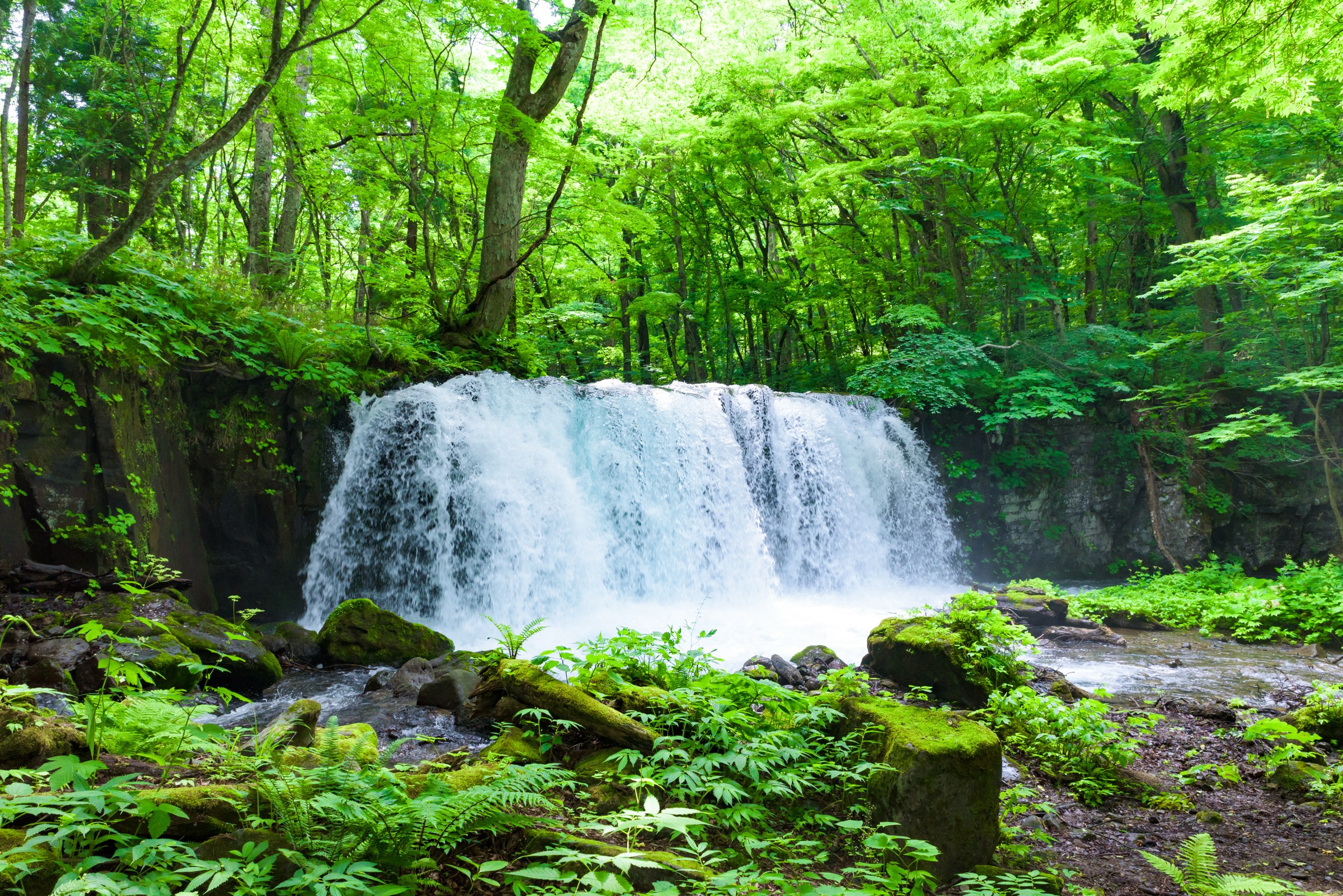
Almost every foreign visitor to Japan travels the same corridor: Tokyo, Kyoto, Osaka, with a look at Fuji on the way. It is a superb week and it is roughly two percent of the country. An hour off that line — often less — is a Japan where the innkeeper has never checked in a foreigner, where the valley has two buses a day, and where a festival happens because it has happened every year for four hundred years, not because anyone is watching.
Two honest warnings before you go looking for it. First: do the famous places first. They are famous for good reason, and skipping Kyoto to seem worldly is a mistake you only make once. Second: “off the beaten path” is not a synonym for “better”. Rural Japan asks something of you — language, patience, a car — and gives back something the cities cannot. This guide is about which trade is worth making, and when.
At a glance
Rural Japan is a second-trip country — or the second week of a long first one. The best first step off the line is the Kii Peninsula (Koyasan and the Kumano Kodo); then Kanazawa, the Japan Alps, Shirakawa-go, Yakushima and the north. Expect less English and fewer trains — and a country almost nobody sees.
Definitions
What off the beaten path actually means in Japan
At a glance
It means leaving the Tokyo–Kyoto–Osaka corridor. The overwhelming majority of foreign visitors never do. An hour off that line, international tourism essentially stops — not thins, stops.
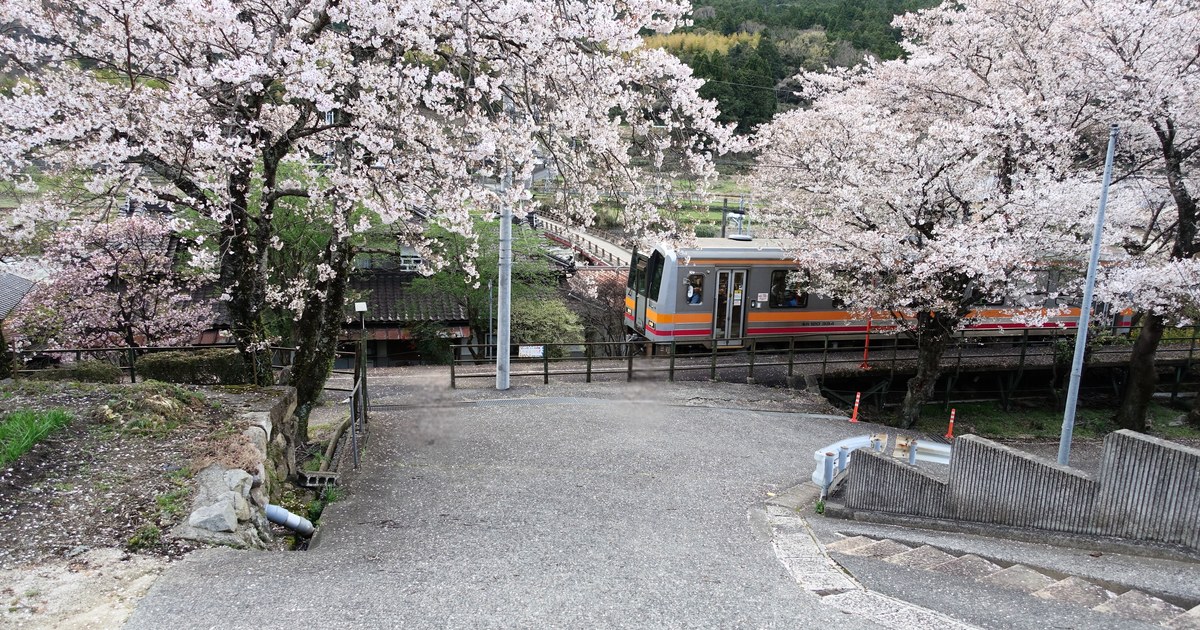
Japan's tourism is startlingly concentrated. Tokyo alone takes a share of foreign visitors that dwarfs everywhere else, and Osaka and Kyoto absorb most of what remains. The consequence is a country with two entirely different experiences of being visited: a handful of places managing genuine overtourism, and everywhere else, where a foreign face in the local supermarket is a small event.
This is why “off the beaten path” in Japan does not require the effort it does elsewhere. You are not looking for an undiscovered island. You are looking for a valley two hours from Kyoto where the coaches do not go — and there are hundreds of them. The bar is much lower than the phrase implies, which is the good news.
Honest advice
Should you do this on a first trip?
At a glance
Probably not. Do the Golden Route first — it is famous because it is extraordinary. Rural Japan is the second trip, or the second week of a fourteen-day first one.
There is a certain kind of traveler who arrives determined to skip Kyoto because it is touristy. They come home having seen some lovely countryside and missed the greatest concentration of beauty in the country, and they usually admit it eventually. The famous places earned their fame. Go.
But there is a real argument for rural Japan on a long first trip. If you have fourteen days, the second week is where you should leave the line — you have the country's grammar by then, you know what a ryokan expects of you, you can read a station. And on a second trip, do not hesitate at all: ten days in one rural region will beat another lap of the highlights every time. Our guide to how many days you need has the arithmetic; our Golden Route guide covers the trip to do first.
The places
Where to go
At a glance
Start with the Kii Peninsula — the most rewarding step off the line and the easiest to reach. Then Kanazawa, the Japan Alps (Takayama, Kamikochi), Shirakawa-go, Yakushima, and the deep north.
The Kii Peninsula
Pilgrimage · Temples · Forest
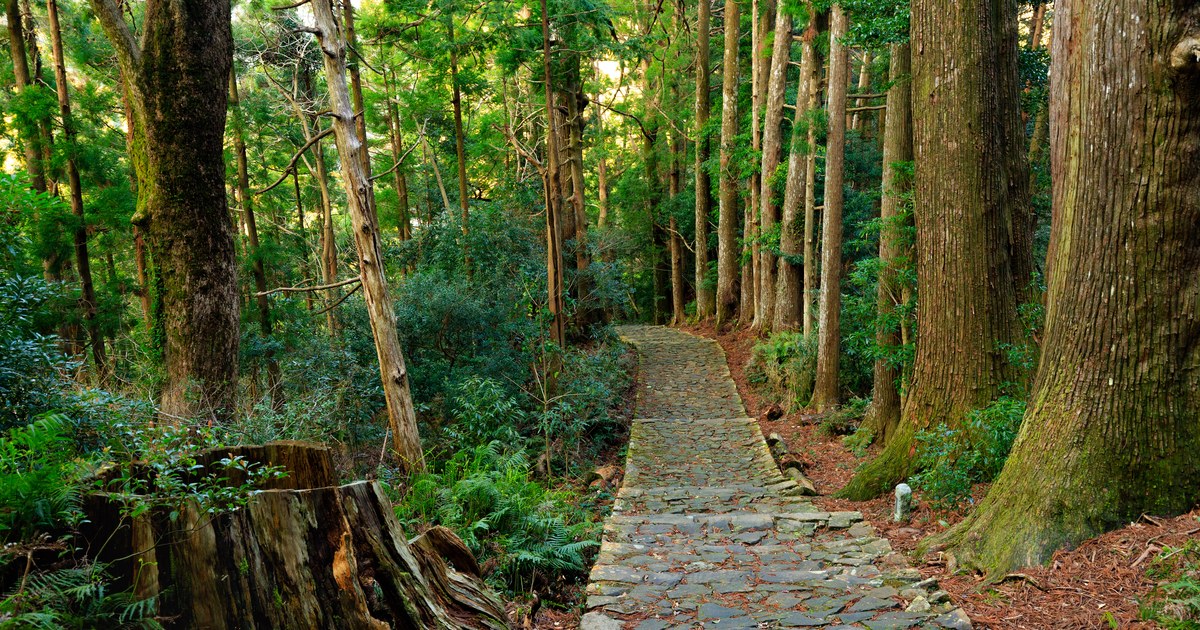
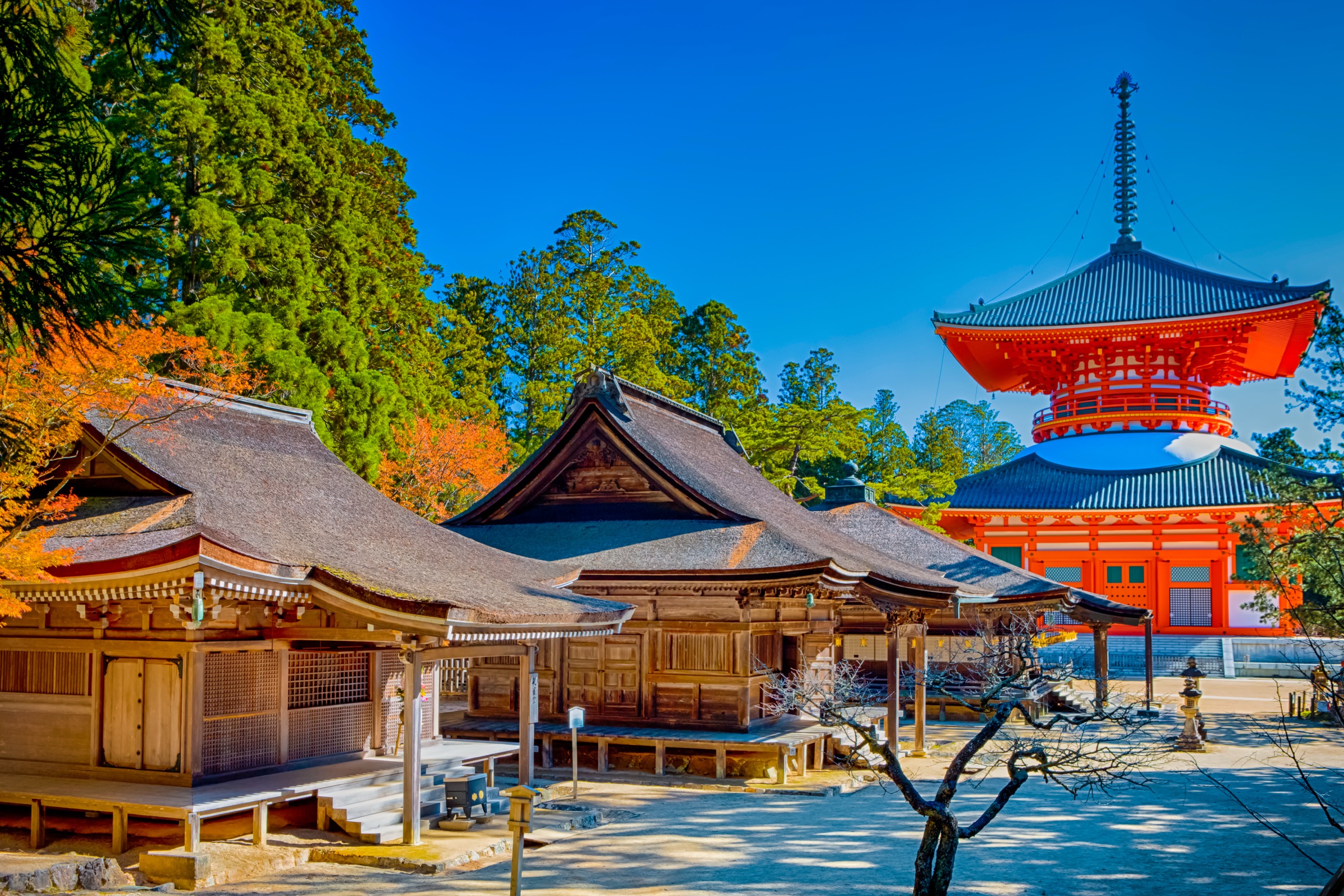
The first place we send anyone leaving the line, because it asks so little and gives so much: two hours from Osaka or Kyoto, and you are in a mountaintop monastery sleeping in a temple, or walking thousand-year-old pilgrimage paths through cedar between village inns. It is remote in feeling and easy in practice — the rare combination.
Kanazawa
Garden · Samurai · Gold
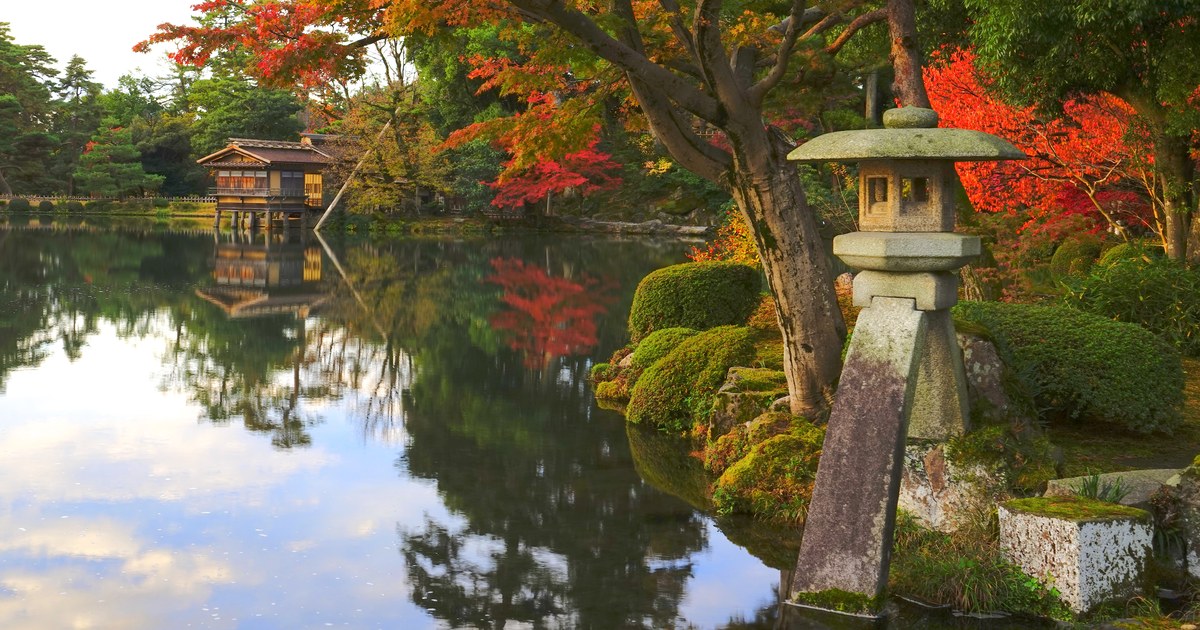
The best small city in Japan for a second trip. It has one of the country's three great gardens, an intact samurai district, a geisha quarter with wooden teahouses, gold-leaf and lacquer workshops still working, and seafood that rivals anywhere — with a fraction of Kyoto's crowds. Two and a half hours from Tokyo by Shinkansen, which barely counts as off the beaten path at all.
The Noto Peninsula — read this first
Recovery · Honesty · Care
Noto reaches north from Kanazawa into the Sea of Japan, and it appears on every list of Japan's beautiful empty places — including, until recently, ours. It needs saying plainly: on 1 January 2024 a magnitude 7.6 earthquake struck this peninsula. More than 700 people died in Ishikawa — most of them not in the shaking itself but in the months afterwards, and the toll is still being certified more than two years on. Then, nine months later, in September 2024, record rain flooded the same communities — including the temporary housing built for people who had lost their homes in the quake.
So Noto is not a “hidden gem”, and we are not going to sell it as one. What it is, is open — and asking you to come. Ishikawa's own tourism body puts it about as directly as an official body ever does: visiting Noto's tourist areas, they say, is what leads to the region's recovery. Spending money here is the support. That is the actual position, from the people who live there.
The honest geography, as of mid-2026: southern and western Noto— Hakui, Nakanoto, Hodatsushimizu — is essentially back to normal, and Keta Taisha, one of the region's great old shrines, came through lightly and has been receiving visitors since the second day. Okunoto, the far north — Wajima, Suzu, Noto town — is a reconstruction zone, and should be understood as one. It is reachable, and people do go, and they are welcomed. It is simply not a place to wander into expecting a polished holiday.
What most guides — including the official ones — still have wrong about Noto.Wajima's famous morning market is notback on its old street: it trades from a temporary site, and the association's own plan is to reopen somewhere new rather than return. The Madoiwa rock on the Sosogi coast, which several official tourism pages still describe in the present tense as “a curious rock with a two-meter hole”, lost its hole in the earthquake. At Wakura Onsen, the region's great hot-spring resort, roughly eleven of nineteen ryokan have now reopened — but read that word carefully. The association's own wording notes that some of those “reopened” inns are trading without an entrance, a lobby or a front desk, on temporary fittings, amid demolition work. Wakura's most famous ryokan of all is not among them: its own notice targets the end of the 2027 financial year — so, in practice, 2028 — and at roughly half its former size, with the old buildings coming down. A further handful of inns are not taking tourists at all, because they are housing reconstruction workers. Which is the detail that matters practically: “open” here does not mean what a booking site implies, and this is a place where someone should be making a phone call in Japanese before anyone books a flight.
Takayama & the Japan Alps
Mountains · Old town · Air
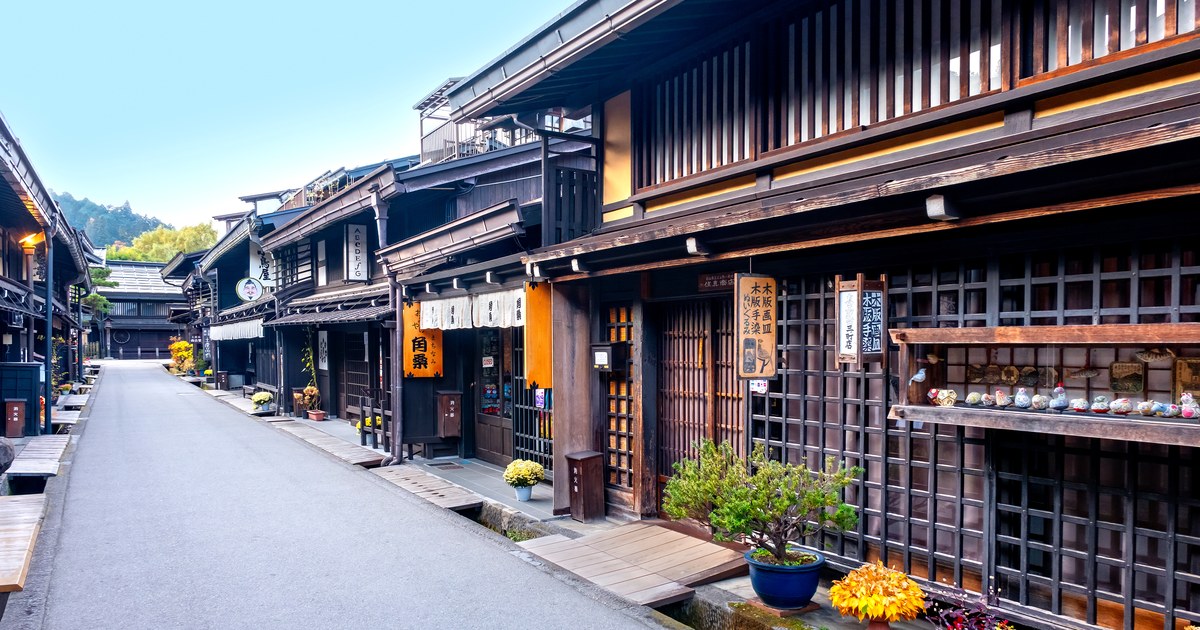
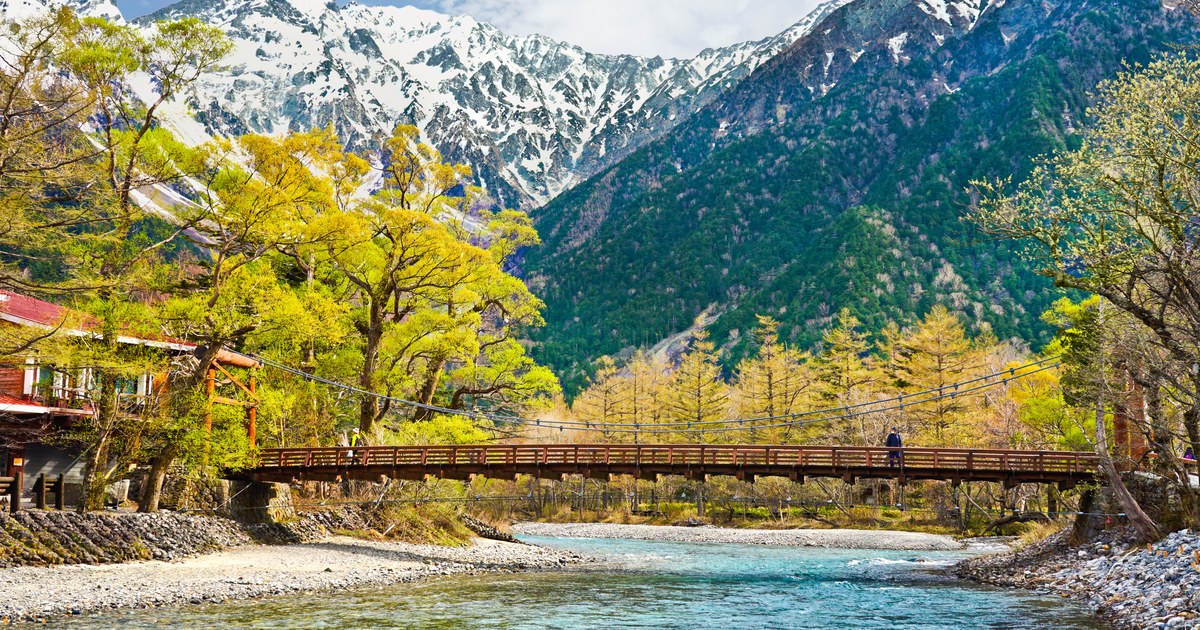
Takayama's old merchant streets are the postcard, but the Alps behind them are the point: Kamikochi's valley of clear river and birch under three-thousand-meter peaks is as beautiful as anywhere in Japan, and it closes for winter, which tells you something about the country you are now in.
Shirakawa-go
Thatch · Snow · UNESCO
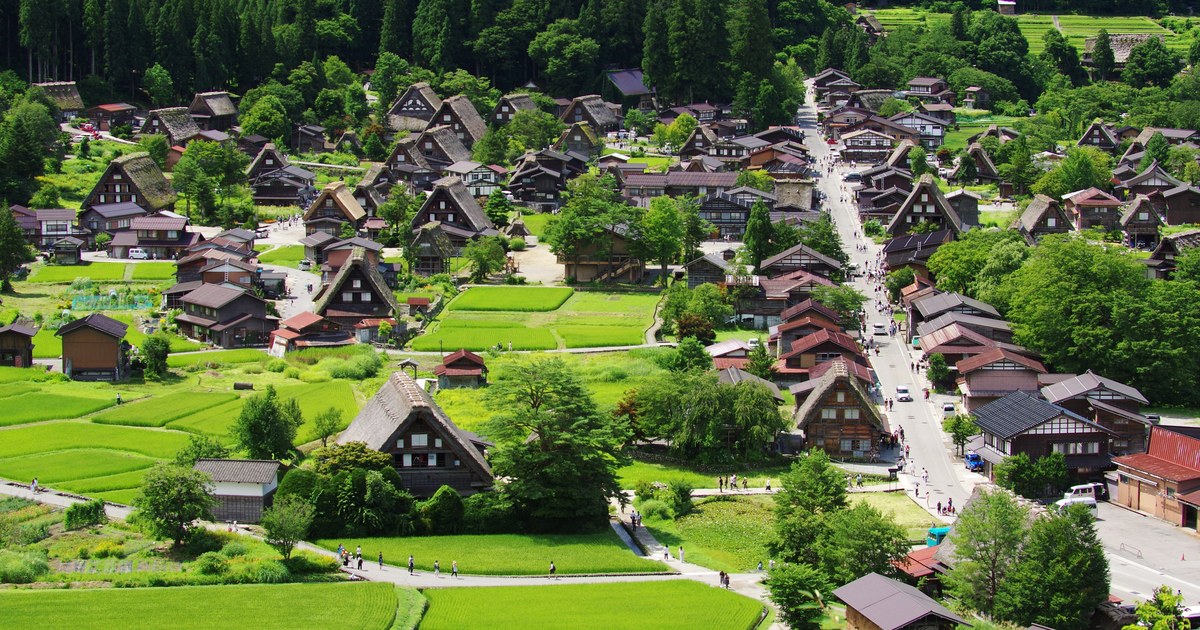
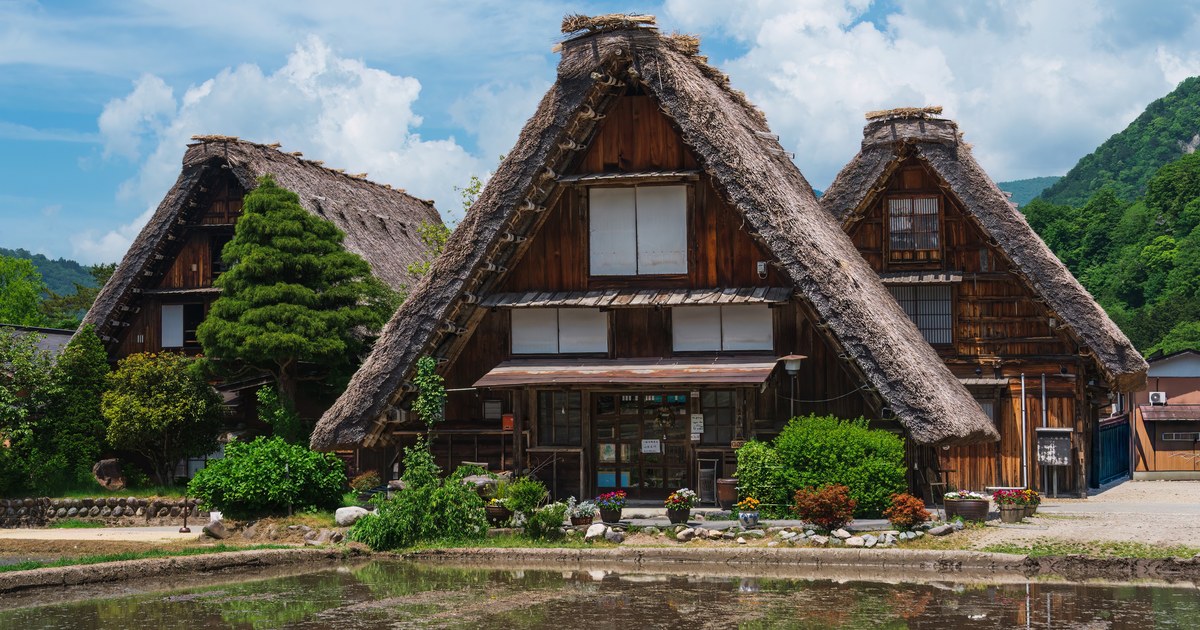
Steep thatched farmhouses built to shed some of the heaviest snowfall on earth, in a valley that was genuinely cut off for months a year within living memory. It is no longer a secret — coaches arrive from mid-morning — but stay a night in one of the farmhouses and the village comes back to you after four o'clock. In deep winter, under two meters of snow, it is unforgettable.
Yakushima
Rainforest · Cedar · Rain
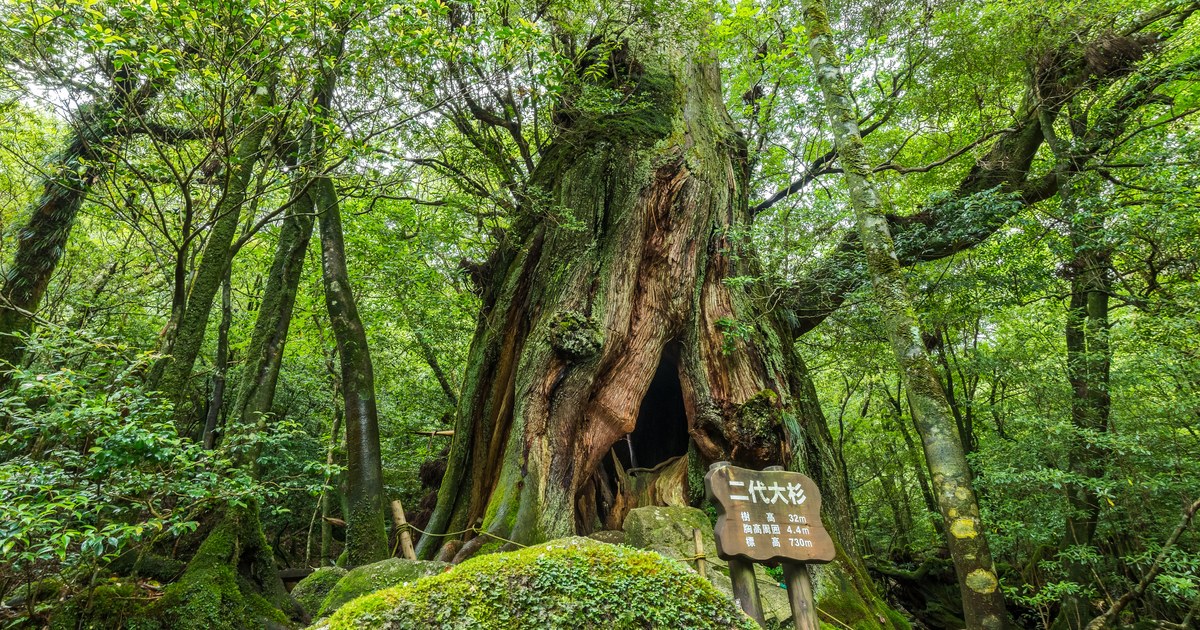
A subtropical island of ancient cedar forest off the south coast, where some trees are thousands of years old and it rains, the locals say, thirty-five days a month. The moss-covered forest that inspired a generation of Japanese animation is real and it is here. It is a genuine expedition and it is worth it.
The deep north
Winter · Onsen · Silence
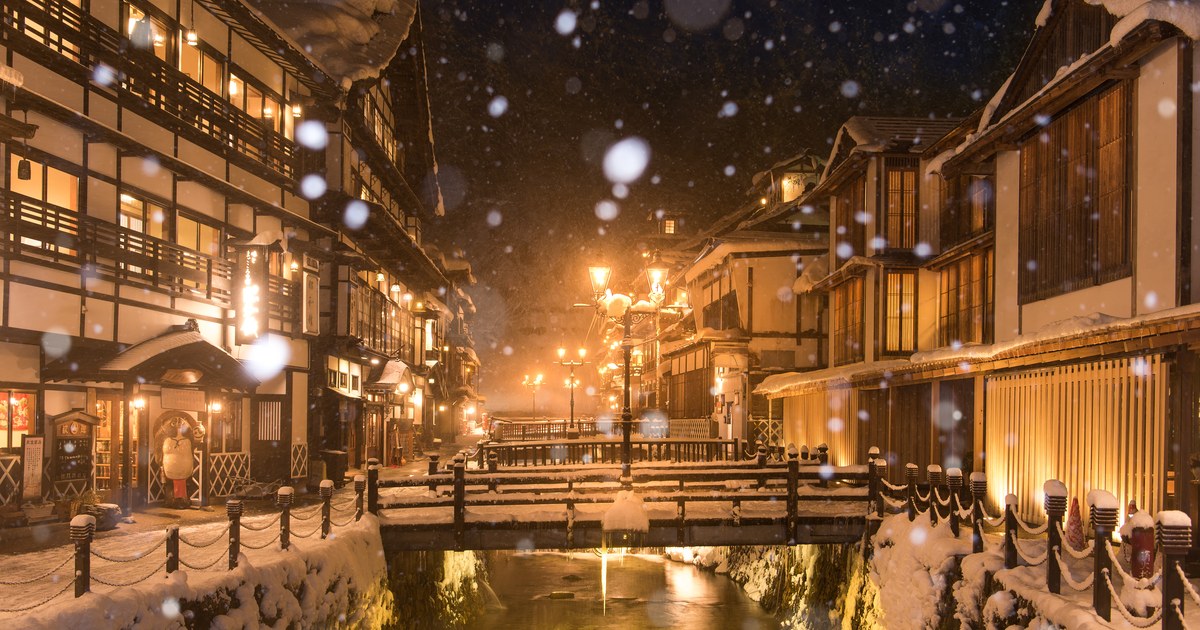
Tohoku, north of Tokyo, is the least-visited region of mainland Japan — snow country, hot-spring villages lit by gas lamps, and a winter that shapes everything about how people live. Almost no foreign travelers come here. That is the entire recommendation.
The trade
The honest reality of rural Japan
At a glance
Less English, fewer trains, earlier nights. The hospitality does not thin — the access to itdoes. What you lose is nuance: the innkeeper's story, the reason the festival exists, the conversation that makes the evening.
Let's be straight about what changes. English signage, which is excellent in the cities, thins fast and then disappears. The two-buses-a-day valley is not a joke. Restaurants close at eight, and in a village of four hundred people there may be one. Cash matters again. And the beautiful inn you found may have no website in any language and no way to book it from abroad.
What does not change is the welcome. Rural Japan is, if anything, warmer than the cities — people are curious, generous, and often quietly delighted that you came. The gap is not hospitality. It is access to it. You will be served a magnificent dinner by someone whose family has run the inn for six generations, and you will not be able to ask them a single thing about it.
That gap is the honest case for a guide out here, and it is a different case from the cities. In Tokyo a guide opens doors. In a mountain valley, a guide is the difference between watching rural Japan and being let into it.
The inn with no website, the road open this week, the story of the valley told by the person whose family has run the place for six generations. Out here that is not a luxury — it is the difference between watching rural Japan and being let into it. Start a conversation →
Practical
Do you need a car?
At a glance
Usually, yes. Japan's rail network is superb between cities and sparse between villages. A car — driven yourself or with a driver — is what turns rural Japan from an endurance test into a pleasure.
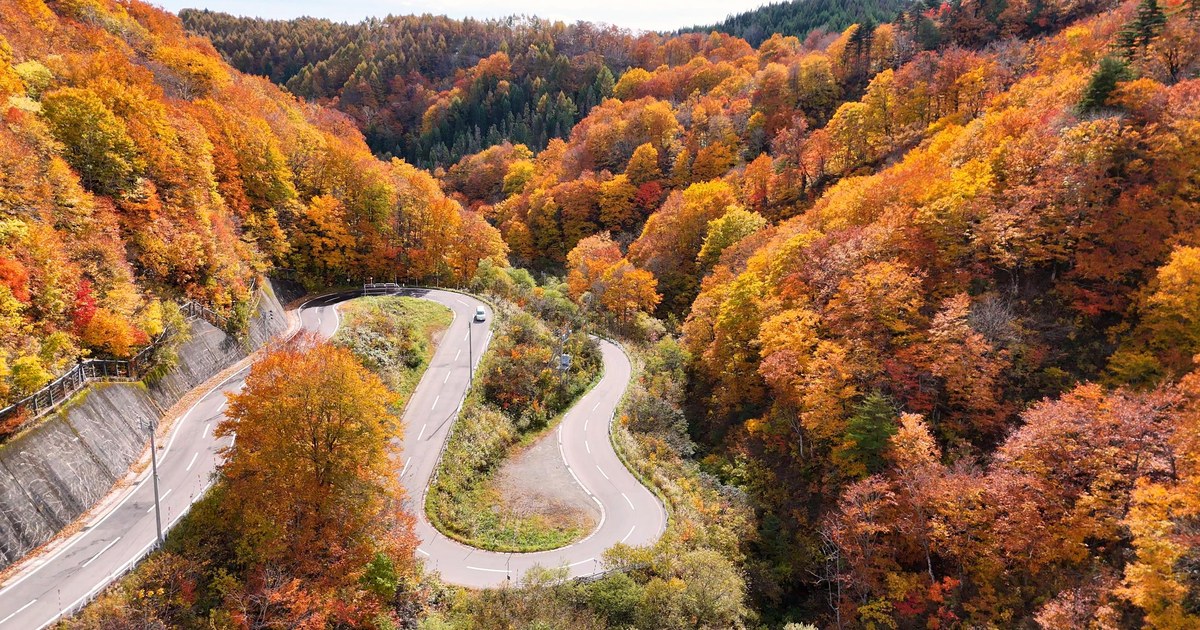
This is the practical fact that most surprises travelers who loved how easy the cities were. The Shinkansen is a marvel; the local bus that runs at 7:10 and 16:40 is also real. Rural itineraries that rely on public transport tend to become itineraries about public transport — waiting for it, missing it, and reshaping the day around it.
The cash trap nobody warns you about. Rural bus fareboxes do not give change — you feed in the exact fare, and the onboard changer accepts ¥1,000 notes only. So the ¥10,000 note your card just produced at the convenience-store ATM is, on a country bus, worthless. Break your money before you leave the city. And while Japan is now majority-cashless on paper, out here it is uneven in ways that are hard to predict: a rural bus may take your Visa but refuse your Suica, and a public bath may be cashless in a way that only works with a Japanese app. Carry more cash than feels reasonable, in small notes.
Driving yourself is feasible — roads are excellent and signs are dual-language on major routes — but the paperwork is not the formality most people assume, and this is where a lot of trips quietly break. Japanrecognizes only the 1949 Geneva Convention International Driving Permit. The 1968 Vienna Convention permit is not valid here, which means drivers licensed in Germany, France, Switzerland, Belgium, Monaco and Taiwan cannot hire a car on an international permit at all. They need an official Japanese translation of their home license instead — and it must come from a small list of authorized bodies. A certified translator in your own country does not count; Japan's police say so explicitly. Card and smartphone versions of the permit are not accepted either — it has to be the paper booklet.
And one small thing that undoes all of the above: if you clear immigration at the automated gates, you get no entry stamp in your passport — and the rental counter needs that stamp. If you intend to drive, use a staffed lane and ask for the stamp. It takes an extra two minutes and it is the difference between having a car and not.
Then there is the driving itself: the good things are down single-track lanes with no parking, and you will spend the day navigating rather than looking. A driver removes every one of these problems at once — the permit question simply evaporates — and out here that matters more than it does anywhere else in Japan.
Where to sleep
Where to stay off the line
At a glance
The inn is the destination: a family ryokan, a thatched farmhouse, a temple lodging, a hot-spring inn with three rooms. These are the best nights in Japan — and the hardest to book from abroad.
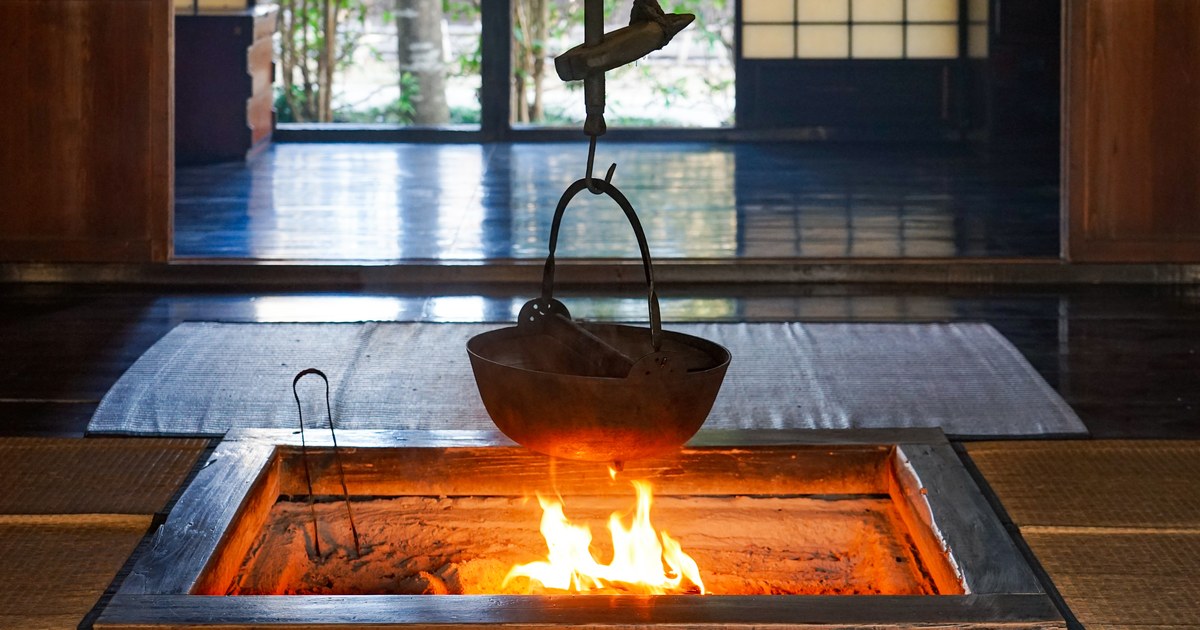
In the cities the hotel is where you sleep between the good things. Out here it is the good thing. A ryokan in a mountain village, run by the same family for generations, with a bath fed by a spring and a dinner of what the valley grew this month, is not accommodation. It is the reason to have come.
The awkward part is reaching them. Many have no English website, no online booking, and a phone answered in Japanese. Some will politely decline a foreign booking not from unfriendliness but because they cannot be sure they can look after you properly — which is, when you understand it, a form of care. It is also why most travelers who go rural end up in the handful of places that market internationally, and never see the three-room inn up the road.
The single best night we arrange for people is almost never in a city. It is a small inn at the end of a valley — and it is invariably a place that took a phone call, in Japanese, from someone who has stayed there before.
Timing
When to go
At a glance
Late spring and autumn for walking and color. Winter is spectacular in the snow country but closes roads and shortens days. Summer is humid low down and glorious in the Alps.
Rural Japan is more seasonal than the cities in a way that is not merely aesthetic — it is structural. Kamikochi closes in winter. Mountain passes shut. Ferries to the islands stop for weather. The village that is a two-hour drive in May is not reachable in February. Plan around it rather than through it.
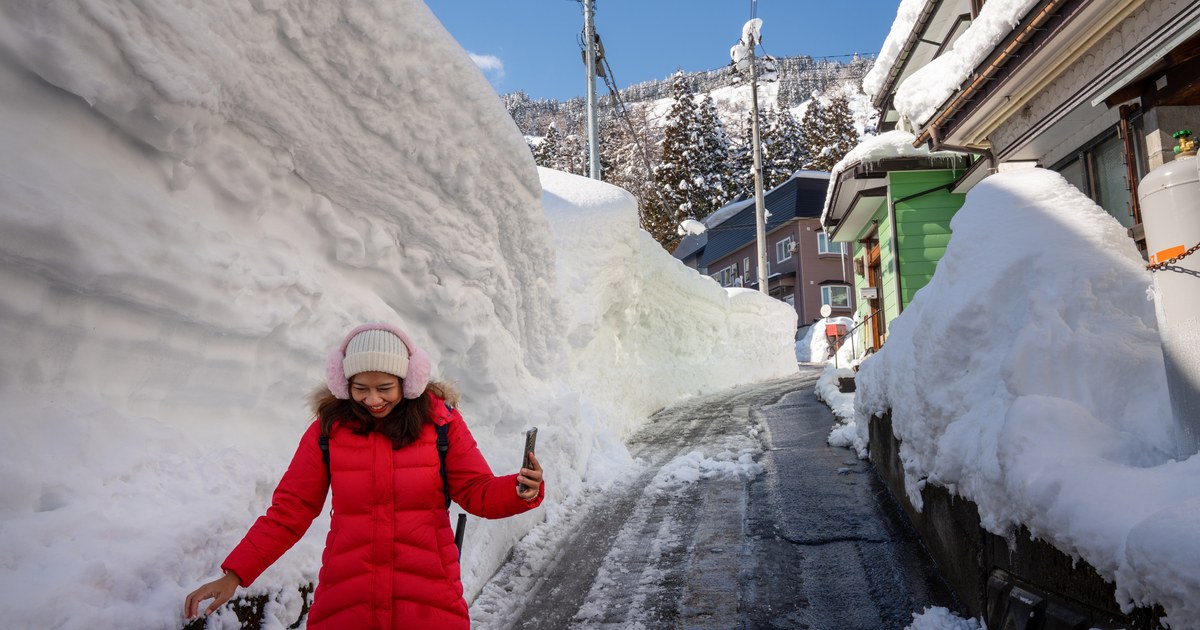
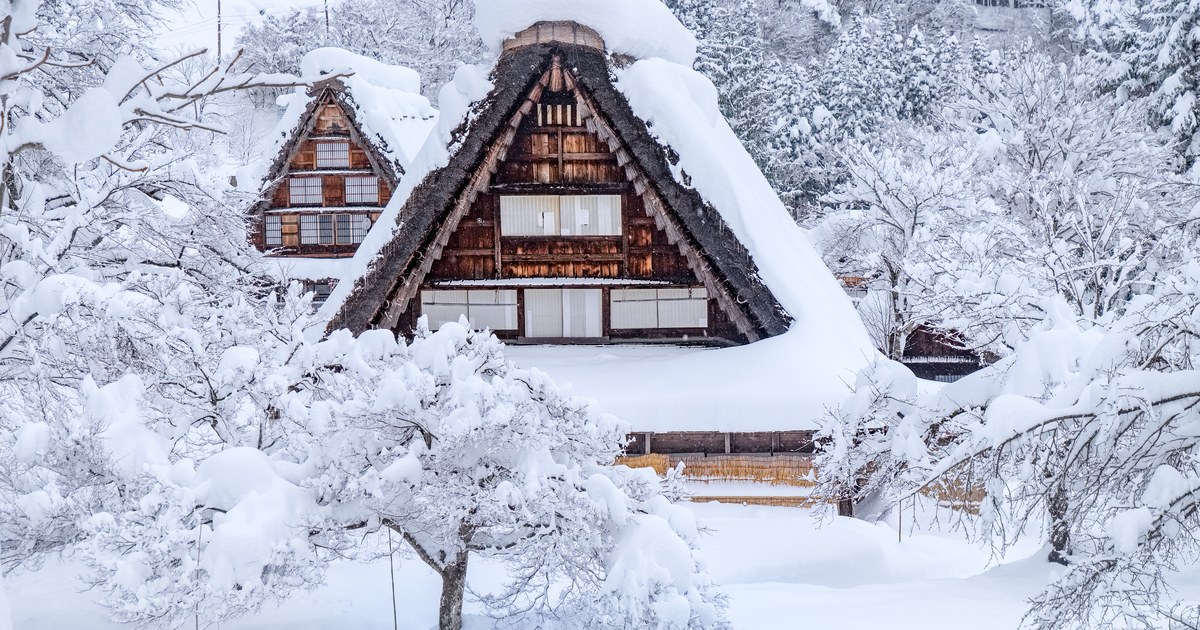
That said, snow country in winter is one of the great experiences in Japan: thatched roofs under two meters of snow, a hot spring outdoors at minus five, lamplight on white streets, and nobody there. If you can take the shortened days and the constrained roads, February in Tohoku or the Japan Alps is as memorable as anything the cherry blossom offers.
The difference
What a private guide adds
In Tokyo, a guide opens doors you didn't know were there. Out here, a guide is the door. The inn with no website and a phone answered in Japanese. The road that is open this week. The innkeeper's story of the valley, which is the actual reason you came and the one thing you cannot get on your own.
That is the part we handle: the introductions, the driving, the language, the quiet logistics. You get to be let in rather than to look on.
Plan a journey off the line →Questions, answered
What does off the beaten path mean in Japan?+
In practice it means leaving the Tokyo–Kyoto–Osaka corridor. The overwhelming majority of foreign visitors stay on that line, so an hour or two off it — the Kii Peninsula, the Japan Alps, the Noto coast, Kyushu, the far north — puts you in a country that sees almost no international travelers at all.
Should you go off the beaten path on a first trip to Japan?+
Generally, no. The famous places are famous because they are extraordinary, and skipping them to seem sophisticated is a mistake you only get to make once. Do the Golden Route first, then come back — Japan's rural half rewards a traveler who already knows the country's language of gestures.
Where is the best off-the-beaten-path destination in Japan?+
For most travelers, the Kii Peninsula — Koyasan's temple lodgings and the Kumano Kodo pilgrimage trails. It is genuinely remote, deeply atmospheric, and reachable in a couple of hours from Osaka or Kyoto, which makes it the rare rural destination that fits a normal itinerary.
Is rural Japan difficult without speaking Japanese?+
Harder than the cities, and rarely impossible. English signage thins quickly, and in the smaller inns nobody will speak it — but the hospitality does not thin at all. What you lose is nuance: the conversation with the innkeeper, the story of the valley, the reason the festival exists.
Do you need a car for rural Japan?+
Often, yes. The rail network is superb between cities and sparse between villages, and the two-buses-a-day reality of a mountain valley is not a myth. A car — driven or with a driver — is what turns rural Japan from an endurance test into a pleasure.
What is Shirakawa-go and is it worth visiting?+
A UNESCO-listed village of steep thatched farmhouses in the mountains of Gifu, built to shed some of the heaviest snow on earth. It is beautiful and it is no longer a secret — day coaches arrive from mid-morning. Stay a night in one of the farmhouses and you get the village back after four o'clock.
Is Kanazawa worth visiting?+
Very. It is the most rewarding small city in Japan for a second trip — a great garden, an intact samurai district, a geisha quarter, gold leaf and lacquer workshops, superb seafood, and a fraction of Kyoto's crowds. Two and a half hours from Tokyo by Shinkansen.
When is the best time for rural Japan?+
Late spring and autumn for walking and color. Winter is spectacular in the snow country — Shirakawa-go under two meters of snow, hot springs in the cold — but roads close and daylight is short. Summer is humid at low altitude and glorious in the Alps.
Continue exploring
Japan changes its prices and its rules more often than most countries, and a good deal of what is written about it online is quietly out of date. The fares, fees, taxes and access rules on this page were checked against the official sources below in July 2026. Where something was likely to move, we have said so in the text. If you are traveling on dates far from that, check the official page — or ask us — rather than trusting any guide, including this one.
Checked against