
Travel Guide · Pilgrimage
Koyasan & the Kumano Kodo
A night among the temples, the lanterns of Okunoin, and the cedar paths of Japan's UNESCO-listed pilgrimage.
The first thing you notice on Koyasan is the quiet. You climb by cable car through cloud, and the noise of the world below simply falls away. By evening the temple town smells of cedar and incense, and the only sound on the path into Okunoin is your own footsteps and, somewhere, a bell. People come to Japan for the cities and the food, and rightly so. But a few come for this — and they tend to say it was the part they remember longest.
This is a guide to the two halves of that experience: Koyasan, the mountaintop monastery where you sleep in a temple and wake to prayer, and the Kumano Kodo, the ancient network of pilgrimage trails that winds south from it through the forests of the Kii Peninsula. We plan and lead these journeys for the travelers we host, so what follows isn't a summary of other people's blogs — it's how we'd walk you through it ourselves.
At a glance
Spend one night on Koyasan in a temple lodging, walk the lantern-lit approach to Okunoin after dark, then give the Kumano Kodo two to four days on foot — the classic Nakahechi route, walked point to point with your bags moved ahead. Four to six days in all. Late spring and autumn are finest, and the whole thing is far more graceful arranged privately than pieced together alone.
The case
Why Koyasan and the Kumano Kodo belong together
At a glance
Koyasan is where this pilgrimage tradition begins; the Kumano Kodo is where it walks. Seen alone, each is a lovely detour. Seen together, they become a single journey with a shape — the reason to make the trip south at all.
Most itineraries treat Koyasan as a day trip and the Kumano Kodo as a niche hike, and travelers end up doing one or the other in a hurry. That's a shame, because they were never separate. For centuries, retired emperors and ordinary pilgrims alike moved between the mountain monasteries and the Kumano shrines on these same paths. To do both is to follow a thread that Japan has been pulling for more than a thousand years.
There is a practical logic too. Koyasan and the Kumano Kodo sit in the same wild, green corner of the country — the Kii Peninsula — reached from Osaka or Kyoto. Combining them means one journey into the mountains rather than two, and it lets the days build: the stillness of the temple town first, then the rhythm of walking, then the release of arriving at a grand shrine on foot the way it was meant to be reached.
The mountain
Koyasan: a town of temples above the clouds
At a glance
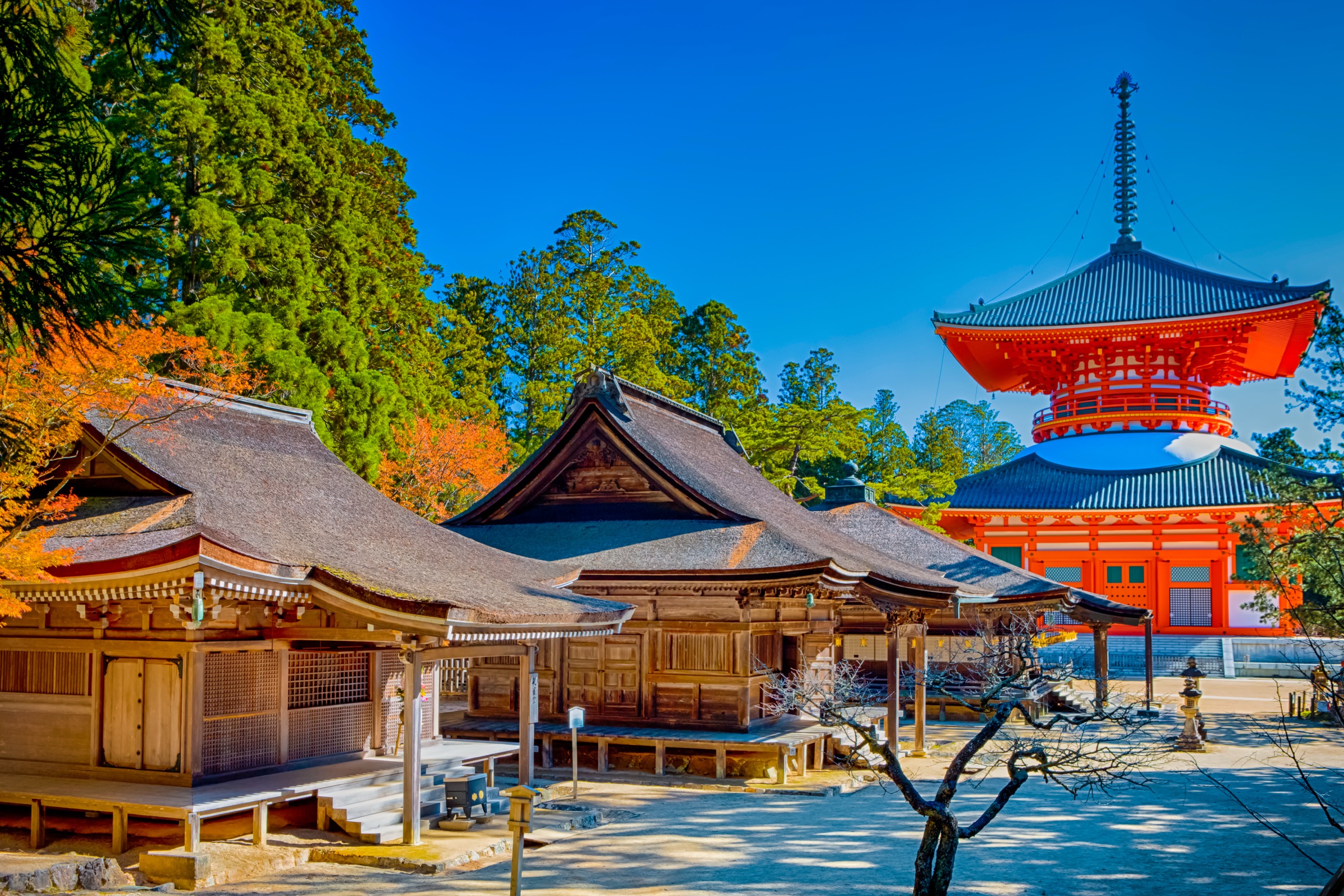
Koyasan is a working monastic town of more than a hundred temples, founded in 816 by the monk Kobo Daishi. You come for the atmosphere, the temple lodging, and Okunoin — and you stay the night, because that is when the mountain is at its most extraordinary.
Koyasan — Mount Koya — isn't a single temple but an entire town given over to Buddhism, set in a basin near the top of a forested mountain. It has been the heart of the Shingon school for twelve hundred years, and it still feels like it: robed monks cross the streets between errands, temple bells mark the hours, and the air carries incense long after you've passed the gate.
The daytime sights are worth your time — the great vermilion Konpon Daito pagoda, the Danjo Garan temple complex, the Reihokan museum of Buddhist art. But the honest advice is not to arrive, tick them off, and leave. Koyasan gives most to those who stay, when the coach visitors have gone and the town returns to the people who live and pray there.
Getting up is part of the pleasure: from Osaka, a train through the valleys to Gokurakubashi, then a funicular that climbs almost vertically into the cloud. We usually arrange a private transfer or a car for the last leg so you can pause at the viewpoints on your own schedule.
The moment
Okunoin after dark
At a glance
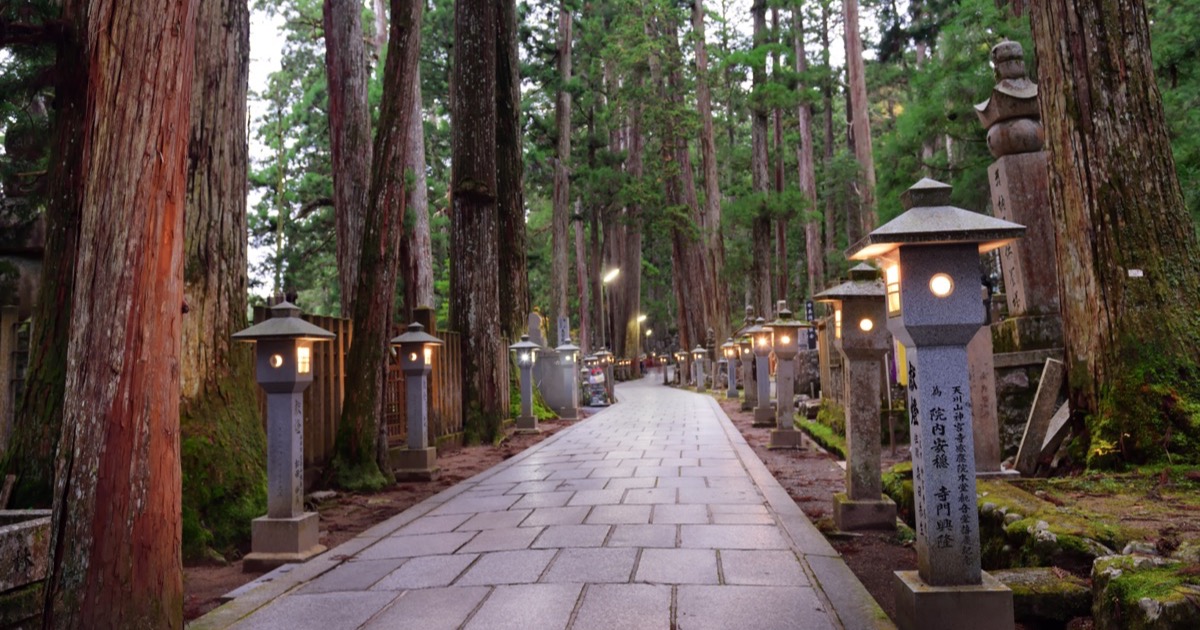
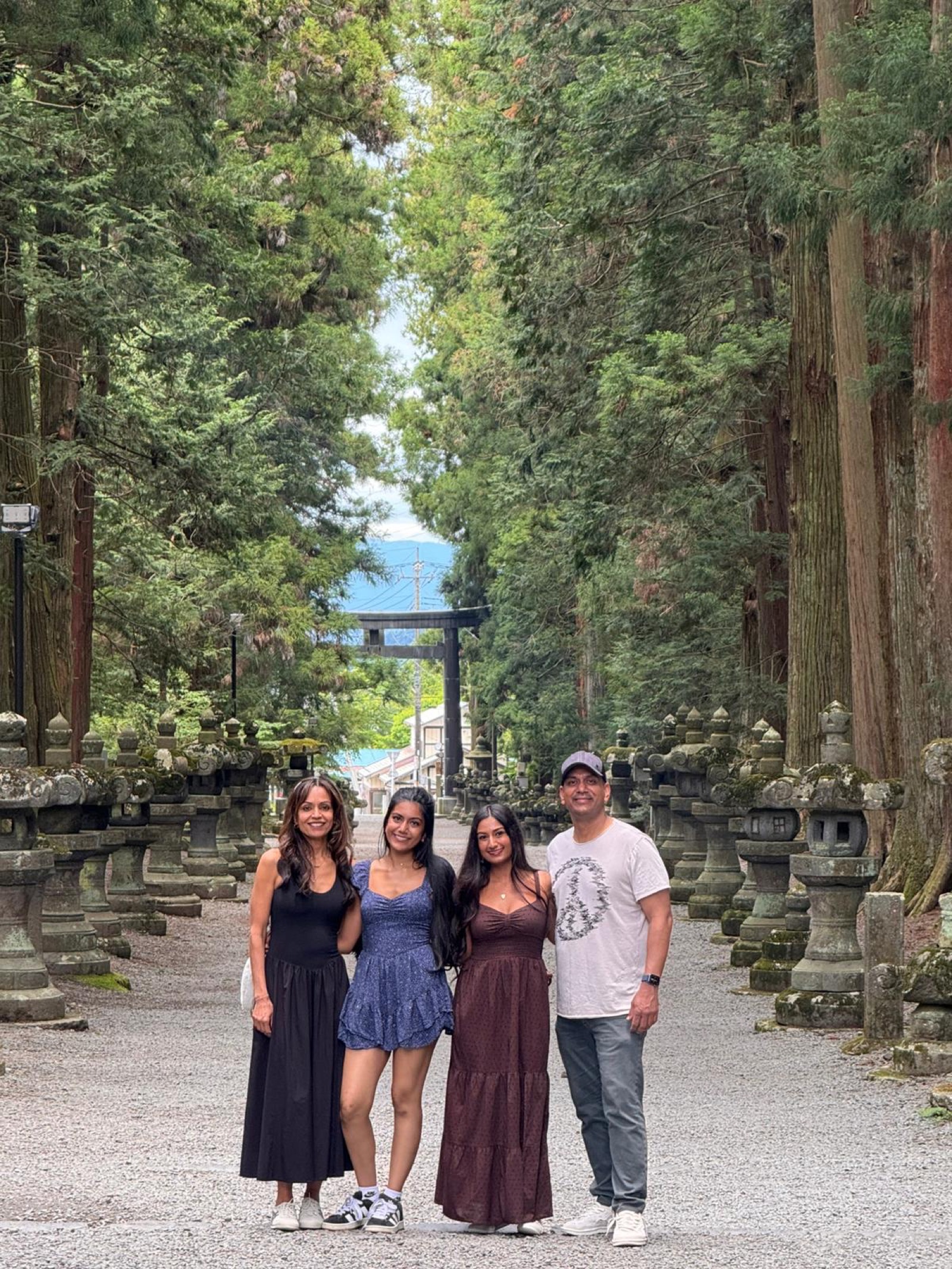
Okunoin is Japan's largest cemetery — two kilometers of moss-covered stones and towering cedars leading to the mausoleum of Kobo Daishi. Walk it at night, when the stone lanterns are lit. It is the single image most travelers carry home from the mountain.
To call Okunoin a cemetery undersells it. It is a forest of ancient cedar, and beneath the trees stand more than two hundred thousand memorials — some centuries old, mossed and leaning, some belonging to the great clans of Japanese history. The path runs for two kilometers to the Torodo, the Hall of Lamps, and beyond it the mausoleum where Kobo Daishi is said to rest in eternal meditation.
By day it is beautiful. By night it is something else. Many temples offer a guided night walk, lanterns throwing light up into the cedars, the graves receding into the dark on either side. It is not eerie so much as immense — a quiet that presses gently on you. If you do one thing on Koyasan, do this.
Where you sleep
A night in a temple (shukubo)
At a glance
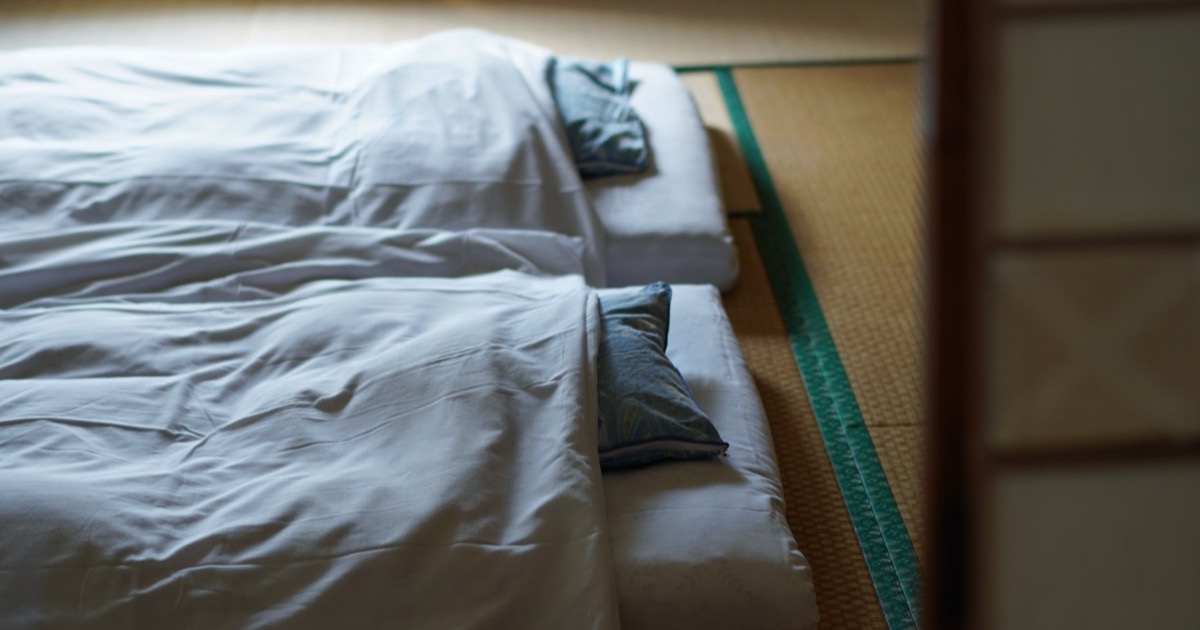
More than fifty of Koyasan's temples take overnight guests. You sleep on futons in a tatami room, often overlooking a private garden, and share in the temple's vegetarian cuisine. Simple, yes — but the finest shukubo are quietly, deeply refined, not an exercise in going without.
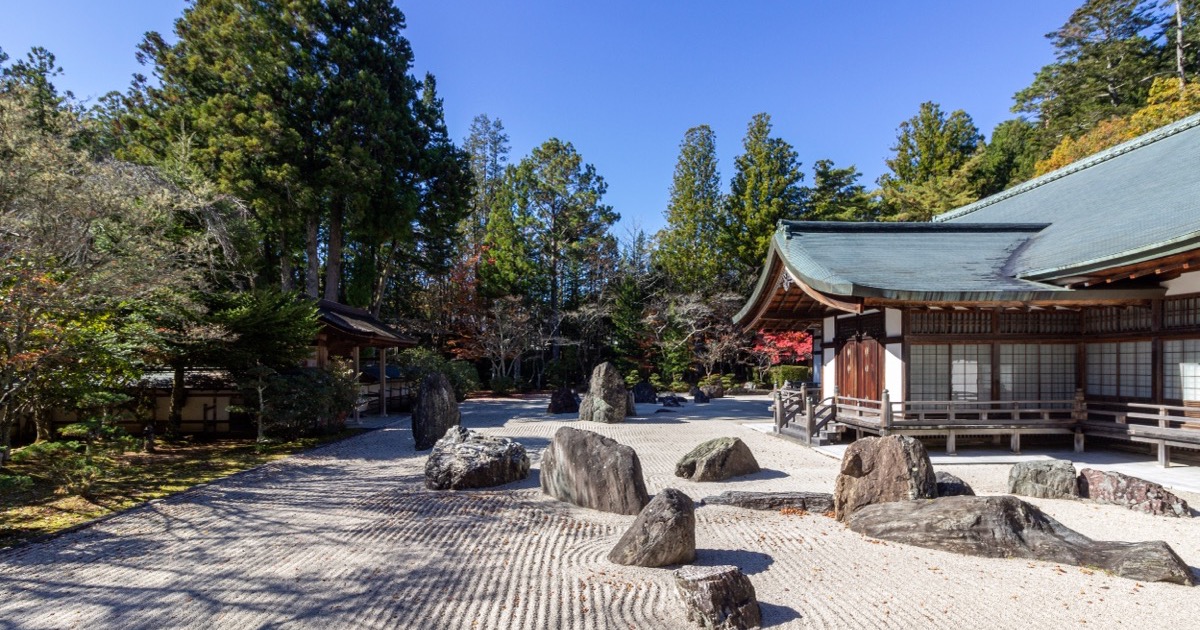
Staying in a shukubo is the reason to give Koyasan a night rather than an afternoon. You are a guest inside a living temple: sliding paper doors, tatami underfoot, a scroll and a single flower in the alcove, a garden framed like a painting by the window. In the evening a young monk brings your meal; in the morning, if you like, you rise in the dark for prayers and the fire ritual, the goma, and watch the day begin the way it has for centuries here.
There is a wide range between temples, and this is exactly where a little knowledge pays. Some are basic and welcome large groups; a handful are exquisite — older, quieter, with gardens worth the trip in themselves and rooms that would not shame a fine ryokan. The best fill early, and they don't always sit at the top of a search. Choosing the right one, and holding the right room, is a small thing that changes the whole night.
The table
Shojin ryori: the quiet luxury of a monk's meal
At a glance
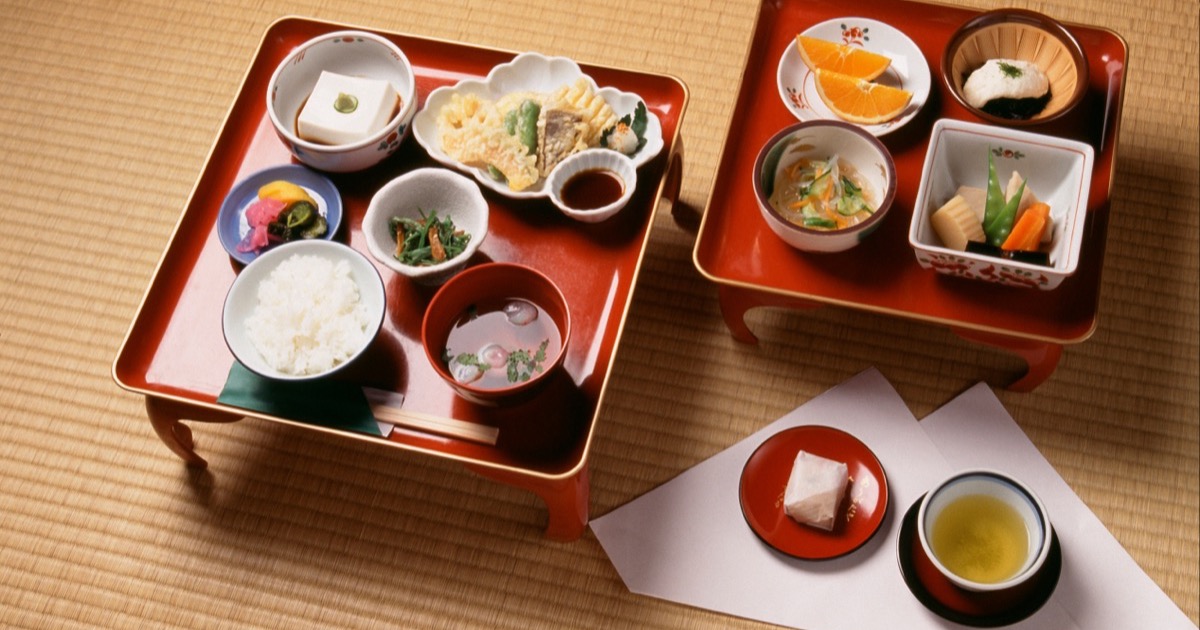
Shojin ryori is the vegetarian temple cuisine of Japanese Buddhism — no meat, no fish, nothing to cause harm, and yet among the most refined food you will eat in Japan. On Koyasan it centers on goma-dofu, the mountain's silken sesame tofu.
It is easy to hear “vegetarian temple food” and picture restraint. The truth is closer to the opposite. Shojin ryori is cooking raised to a discipline: seasonal vegetables, mountain plants, tofu in a dozen forms, each dish plated with the same care as a kaiseki course, arranged on lacquer so that color and balance become part of the meal. Nothing shouts. Everything is considered.
Koyasan's signature is goma-dofu — sesame “tofu” set to a texture between custard and cloud, nutty and cool, a taste people remember years later. Eaten in the temple where you are sleeping, after a walk through Okunoin, it stops being a meal and becomes part of the place. This is luxury of a particular kind: not abundance, but attention.
The walk
The Kumano Kodo: walking Japan's UNESCO-listed pilgrimage
At a glance
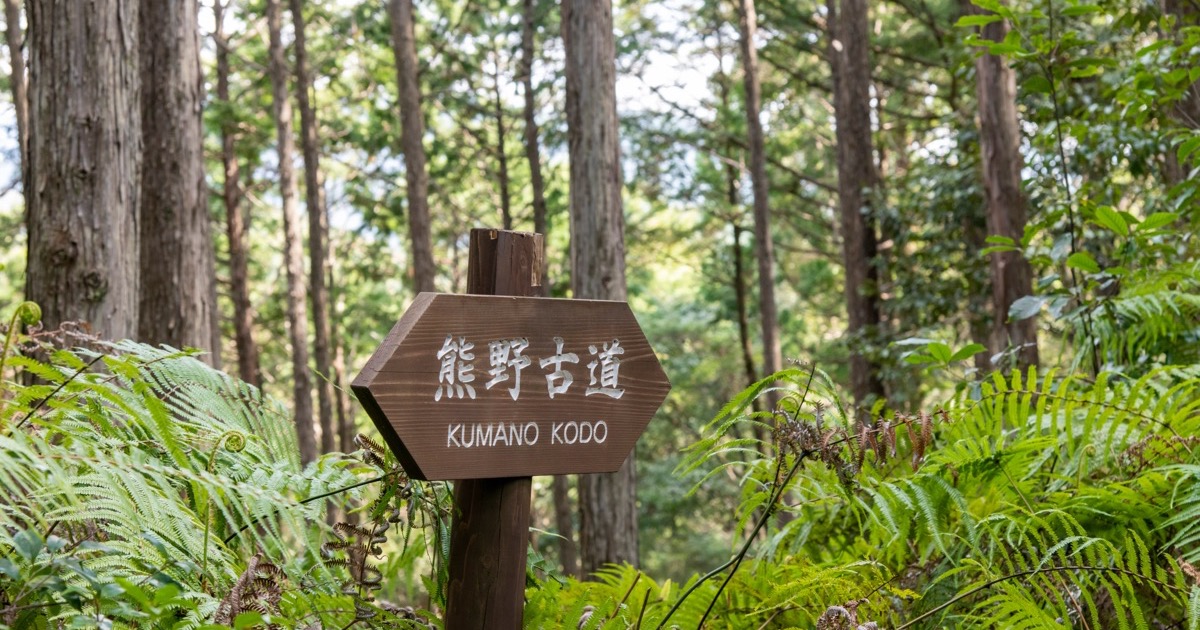
The Kumano Kodo is a UNESCO-listed network of pilgrimage routes to the three grand shrines of Kumano — one of only two such routes in the world, alongside Spain's Camino de Santiago. You walk cedar forest, stone paths and mountain passes between village inns, arriving on foot at the shrines as pilgrims have for a thousand years.
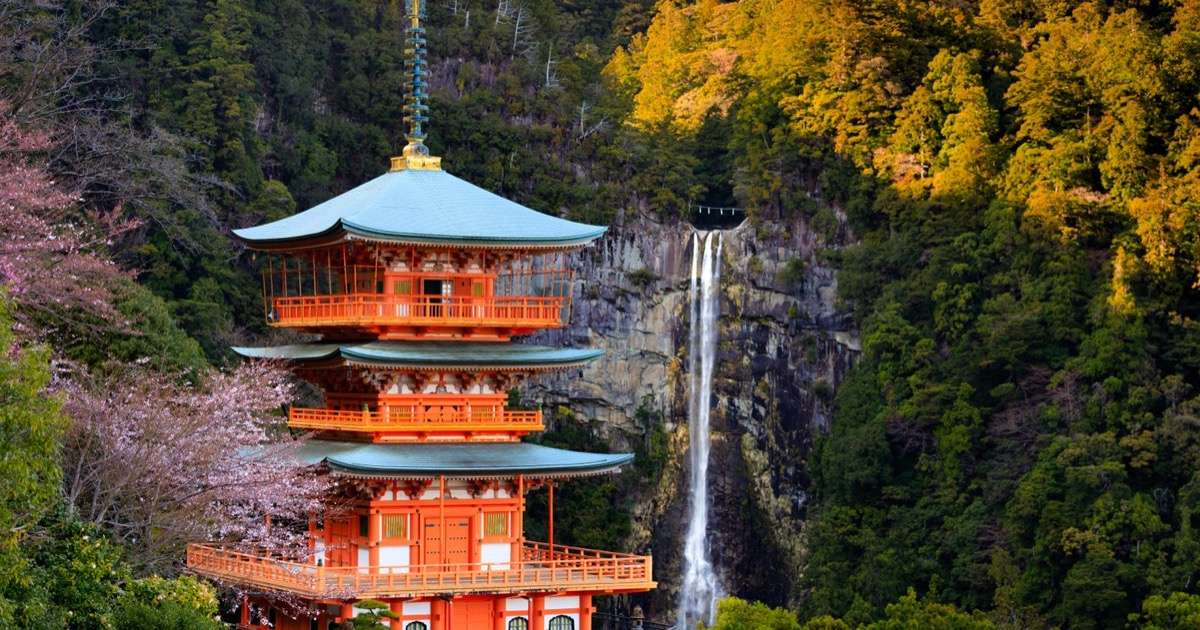
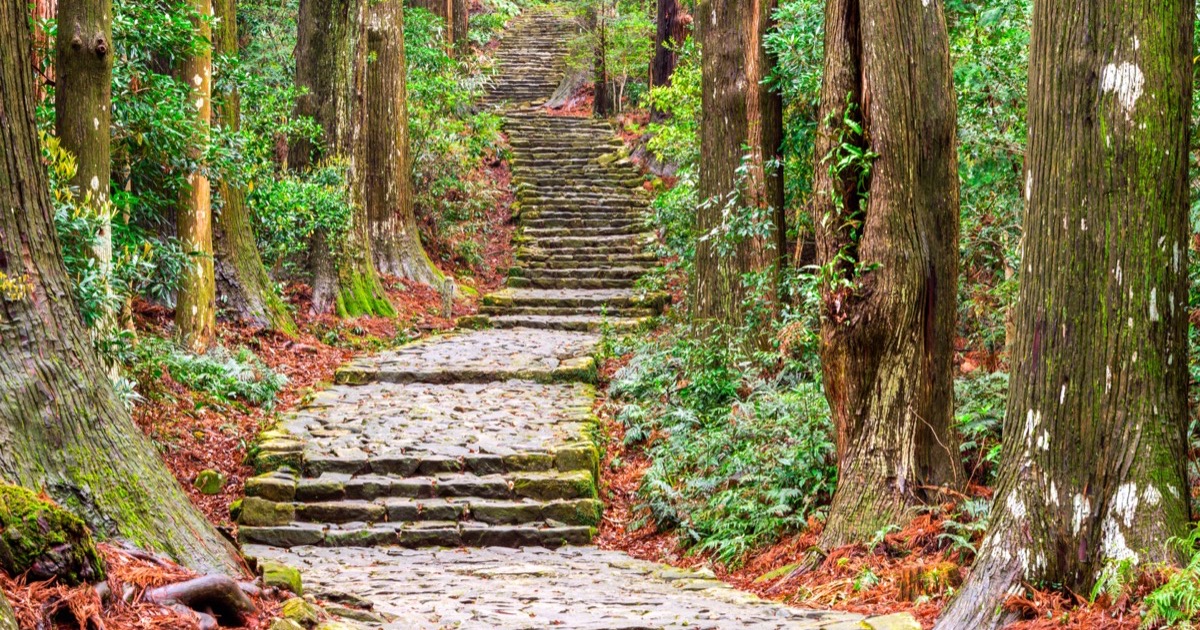
South of Koyasan the mountains soften into deep, wet forest, and through them run the Kumano Kodo — the paths that lead to Kumano Hongu Taisha, Kumano Nachi Taisha and Kumano Hayatama Taisha, the three great shrines. At Nachi the trail delivers you to a vermilion pagoda set against Japan's tallest single-drop waterfall; it is one of the most photographed views in the country, and arriving there on foot rather than by bus is the whole point.
What surprises most first-time walkers is how gentle the pilgrimage can be. This is not an endurance feat. The paths pass through living villages; you sleep in small family inns, soak in hot springs at the day's end, and eat remarkably well. The walking is the meditation, and the comfort at either end is real. Done thoughtfully, it is one of the most restorative journeys in Japan — and still, remarkably, one of the quietest.
If you have walked the Camino, this is worth knowing.Because these two are the world's only UNESCO-listed pilgrimage routes, Kumano and Santiago de Compostela jointly recognize anyone who has walked both as a Dual Pilgrim — a certificate from the head priest of Kumano Hongu Taisha, and a pin. It costs nothing and needs no advance registration. And the shortest qualifying walk on this side is about seven kilometers: Hosshinmon-oji down to Hongu, plus visiting the other two grand shrines. So a Camino you finished years ago can be completed here in an afternoon — which is, for a certain kind of traveler, the single best reason to come.
Choosing
Which route, how hard, how many days
At a glance
The Nakahechi is the classic route and the right choice for most — beautiful, well served by inns, and flexible from a single half-day to a multi-day traverse. Routes are graded, so the day is matched to the walker, not the reverse.
The Kumano Kodo is several routes, not one. The Nakahechi, running inland from the west, is the historic imperial route and the best supported — the natural choice unless you have a reason to do otherwise. The Kohechi links Koyasan directly to Kumano over high passes and is superb but demanding; the coastal Ohechi and the eastern Iseji are quieter still.
| Route | Character | Effort |
|---|---|---|
| Nakahechi | Classic imperial route, inns throughout | Gentle to moderate |
| Kohechi | Koyasan to Kumano over high passes | Demanding |
| Ohechi | Coastal, quiet, long | Moderate |
| Iseji | Eastern, stone-paved, remote | Moderate |
You don't have to walk every step. The graceful way to do it is to walk the loveliest sections and let a car carry you past the stretches that shadow a road — keeping the romance, losing the tedium. Which sections those are, on any given week and weather, is precisely the kind of thing worth asking someone who walks it often.
Planning
How many days do you need?
At a glance
Four to six days is the natural shape: a night on Koyasan, then two to four days on the Kumano Kodo. Three days captures the essence; a week lets you walk the full Nakahechi unhurried and add the coast at Nachi.
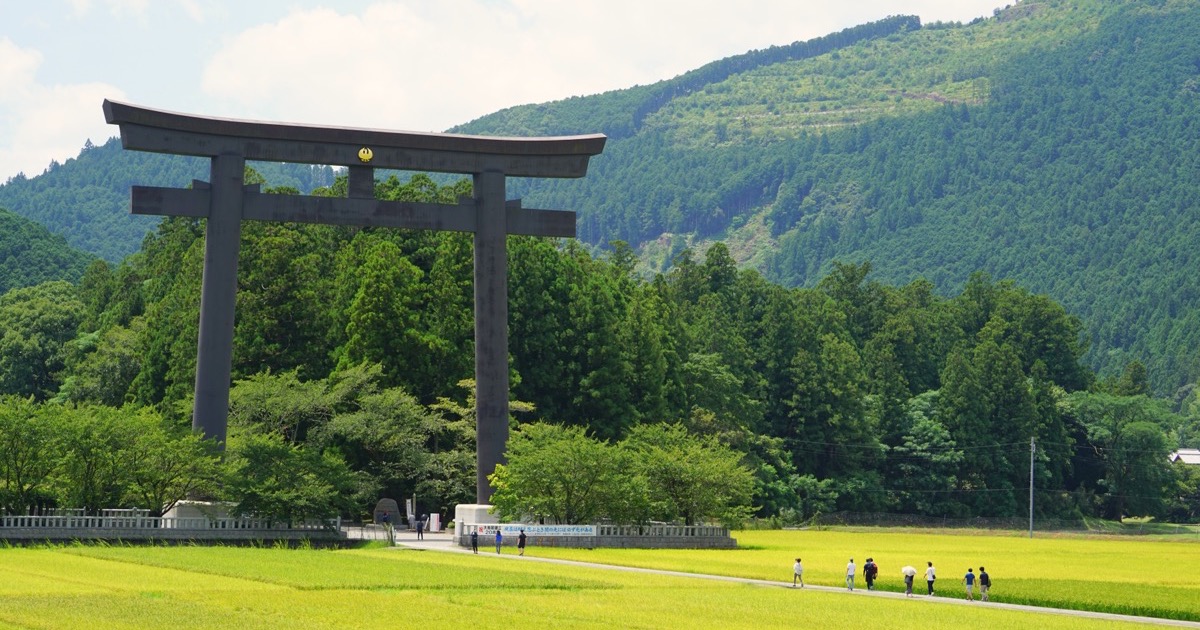
A short version — three days — gives you a night on Koyasan, a transfer south, and a day or two of the best walking before you rejoin the wider trip. It works, and it is still wonderful. The fuller shape, five or six days, is the one we'd gently steer you toward if the calendar allows: enough to let the mountain settle in, walk the Nakahechi at the pace it deserves, and finish at Nachi's waterfall without watching the clock.
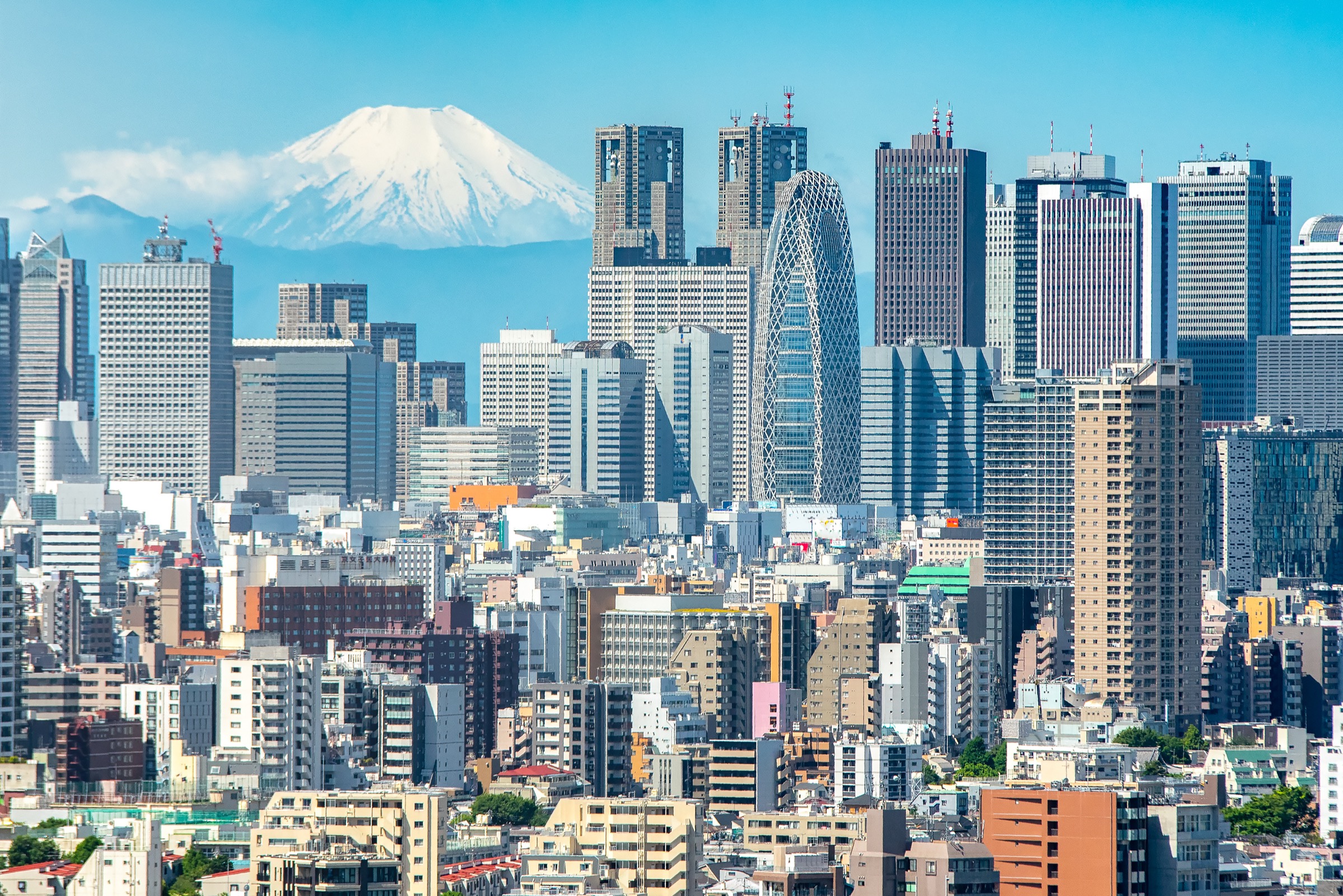
It slots naturally into a larger journey. Many of the travelers we host place this between the cities — after Kyoto, before the trip winds down — so the pilgrimage becomes the still center of the whole itinerary. If you're still shaping the overall trip, our Tokyo guide and the story of a family's seven days in Japan show how the pieces fit around it.
The right temple, the bags moved ahead, the section worth walking and the one worth driving past — none of it is difficult once someone knows. Getting there without that is simply a harder walk than it needs to be. Start a conversation →
Timing
When to walk
At a glance
Late April to early June and October to November are finest — mild, clear, and either fresh green or autumn color in the cedars. Avoid the humid, leech-prone height of summer; deep winter is beautiful but cold on the mountain.
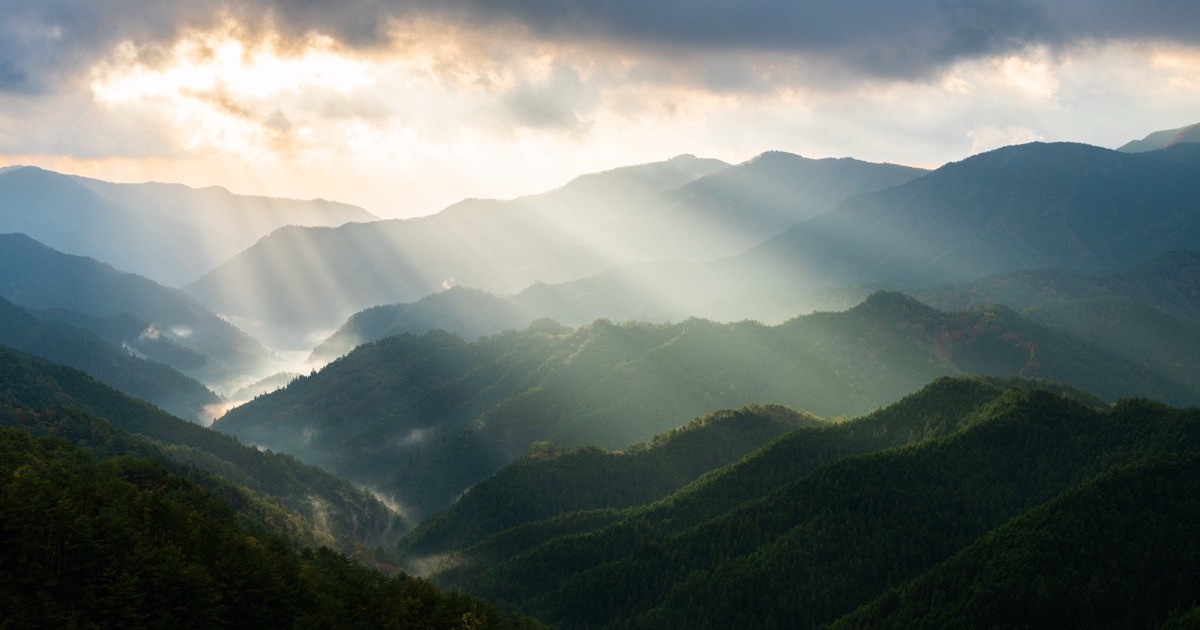
The Kii Peninsula is one of the wettest places in Japan, and that is exactly why it is so green — but it means timing matters. Spring brings new leaf and comfortable walking; autumn brings crisp air and color, and is many walkers' favorite. Both are popular enough that the best inns book out months ahead, which is the single strongest argument for planning early or letting someone hold the beds for you.
Whatever the season, build in a hot spring at the end of the walking days. Yunomine Onsen, on the Nakahechi, has a tiny UNESCO-listed bath said to have been used by pilgrims for purification — a fitting way to close a day on the trail.
The difference
What walking it privately adds
You can walk the Kumano Kodo alone, and some love doing exactly that. What you can't easily arrange from abroad is the finest shukubo held before it fills, the luggage moved ahead so you carry only a day pack, the car that shortcuts the dull stretch, and a guide who reads the forest and its thousand years of history.
That is the part we handle: the reservations, the logistics, the quiet timing. You simply get to walk — and to be present for it.
Plan your pilgrimage →Questions, answered
What is the Kumano Kodo?+
The Kumano Kodo is a network of ancient pilgrimage routes through the forested Kii Peninsula south of Osaka and Kyoto, walked for more than a thousand years to reach the three grand shrines of Kumano. It is one of only two pilgrimage routes in the world registered as a UNESCO World Heritage Site — the other is the Camino de Santiago in Spain.
What is the Dual Pilgrim, and can I qualify?+
The Kumano Kodo and Spain's Camino de Santiago are the only two pilgrimage routes registered as UNESCO World Heritage, and the two regions jointly recognize anyone who has walked both as a Dual Pilgrim. It is free, and there is no advance registration. On the Camino side you need the final 100km on foot; on the Kumano side, the shortest qualifying option is only about 7km — Hosshinmon-oji down to Kumano Hongu Taisha — plus visits to the other two grand shrines. If you have walked the Camino, one afternoon in Japan completes the pair.
Why combine Koyasan with the Kumano Kodo?+
Koyasan is the mountaintop monastery where the pilgrimage tradition of this region begins; the Kumano Kodo is where it walks. Doing them together turns two beautiful half-days into one coherent journey — a night among the temples, then the forest paths that historically linked them. Most travelers see one; the two together is the version worth the trip.
Do you have to be religious or very fit to walk the Kumano Kodo?+
Neither. You do not need to be Buddhist or Shinto to feel what these paths hold — most walkers aren't. And the routes are graded: you can do a single gentle two-hour stretch or a multi-day traverse. We match the day to the traveler, not the other way around.
What is a shukubo (temple stay)?+
A shukubo is lodging inside a working Buddhist temple. At Koyasan more than fifty temples welcome overnight guests: you sleep on futons in a tatami room, share in the vegetarian temple cuisine, and — if you wish — join the monks for morning prayers. It is simple, but it is not roughing it; the best temples are quietly refined.
How many days do you need for Koyasan and the Kumano Kodo?+
Four to six days is the natural shape: a night on Koyasan, then two to four days walking selected sections of the Kumano Kodo with comfortable stays between. Short on time, a three-day version captures the essence; with a week you can walk the classic Nakahechi route at an unhurried pace.
When is the best time to walk the Kumano Kodo?+
Late April to early June and October to November are the most rewarding — mild days, clear light, and either fresh green or autumn color in the cedars. Summer is humid and the trails can be leech-prone after rain; deep winter is quiet and beautiful but cold at altitude on Koyasan.
Is the Kumano Kodo walked point to point, or can you return to one base?+
Traditionally it is walked point to point, staying in a different village each night as pilgrims did. We handle the logistics that makes this graceful — luggage moved ahead, transfers where a road shortcuts a dull stretch, a car on hand — so you carry only a day pack and keep the romance without the hardship.
Can Koyasan and the Kumano Kodo be done as a private, guided journey?+
Yes, and it is where the region rewards a guide most. Reservations at the finest temples, a walking guide who reads the forest and its history, seamless transfers, and the freedom to slow down or press on — all arranged around you. This is the way we plan it for the travelers we host.
Continue exploring
Japan changes its prices and its rules more often than most countries, and a good deal of what is written about it online is quietly out of date. The fares, fees, taxes and access rules on this page were checked against the official sources below in July 2026. Where something was likely to move, we have said so in the text. If you are traveling on dates far from that, check the official page — or ask us — rather than trusting any guide, including this one.
Checked against