
Travel Guide · Osaka
Osaka: The Complete Guide
The nation's kitchen — where to eat, how long to stay, and why Osaka deserves more than a bed near Kyoto.
Osaka is the city visitors from the West most often get wrong. It sits thirty minutes from Kyoto, so it becomes the place people sleep — a night near the airport, a bowl of something on the way through. Then they go home having missed the city that Japan itself goes to when it wants to eat.
This is a city with its own temperament. Where Tokyo is precise and Kyoto is careful, Osaka is direct, funny and warm — strangers talk to you, the comedy tradition is genuine culture rather than an export, and the whole place organizes itself around the proposition that lunch matters. The local word is kuidaore: to eat yourself into ruin. It is said with pride. This guide is about taking Osaka on its own terms rather than as an afterthought to the temples.
At a glance
Give Osaka one to two days — and at least one full evening. Stay in Minami (Namba / Shinsaibashi) if you came to eat, Umeda if you want polish and transport. The food is the sightseeing here. And it makes the best base in Kansai: Nara, Kobe, Himeji and Kyoto are all a day trip away.
The case
Why Osaka is worth more than a night
At a glance
Osaka receives more international visitors than any Japanese city except Tokyo— and it is the country's undisputed food capital. Treating it as a base for Kyoto is the most common mistake on a first trip.
There is a hierarchy in most first-time itineraries: Tokyo for the energy, Kyoto for the beauty, Osaka for the airport. It is worth knowing that Japanese travelers do not see it that way at all. Osaka is where people from across the country go for a weekend of eating, and it draws more foreign visitors than Kyoto does — a fact that surprises nearly everyone who assumed the opposite.
What Osaka lacks is a single postcard image. It has no Fuji, no golden pavilion, no lane of vermilion gates. What it has instead is a texture — the canal at night, a counter where the chef is also the comedian, a covered market that runs for blocks, a castle with a park around it, and food that is genuinely better and cheaper than in either of its more famous neighbours. It is a city you experience rather than photograph, which is exactly why it gets skipped, and exactly why the people who stay come back.
Planning
How many days do you need in Osaka?
At a glance
One to two days suits most itineraries. One night gives you Dotonbori and one proper meal; two days adds the castle, a neighborhood or two and a day trip. Anyone who travels for food can fill three without repeating themselves.
Osaka is compact and flat, which means a day here covers more ground than a day in Kyoto. If you have one night, spend it in Minami: eat your way along Dotonbori, then find a counter and sit down properly. That alone justifies the stop.
| Days | What it gives you |
|---|---|
| 1 night | Dotonbori, street food, and one meal you'll talk about |
| 2 days | Add the castle, Kuromon market, a neighborhood, a second dinner |
| 3+ days | Use it as the Kansai base — Nara, Kobe, Himeji, Kyoto all as day trips |
Most itineraries pair Osaka with Kyoto, and the two make an excellent contrast — a morning among the temples, an evening in the noise. They are thirty minutes apart and could not be less alike.
The point
Where and what to eat in Osaka
At a glance
Takoyaki (octopus dumplings), okonomiyaki (savory pancake), kushikatsu (fried skewers) — all invented here. Graze along Dotonbori and Kuromon Market, then sit down at a counter for the meal that actually matters.
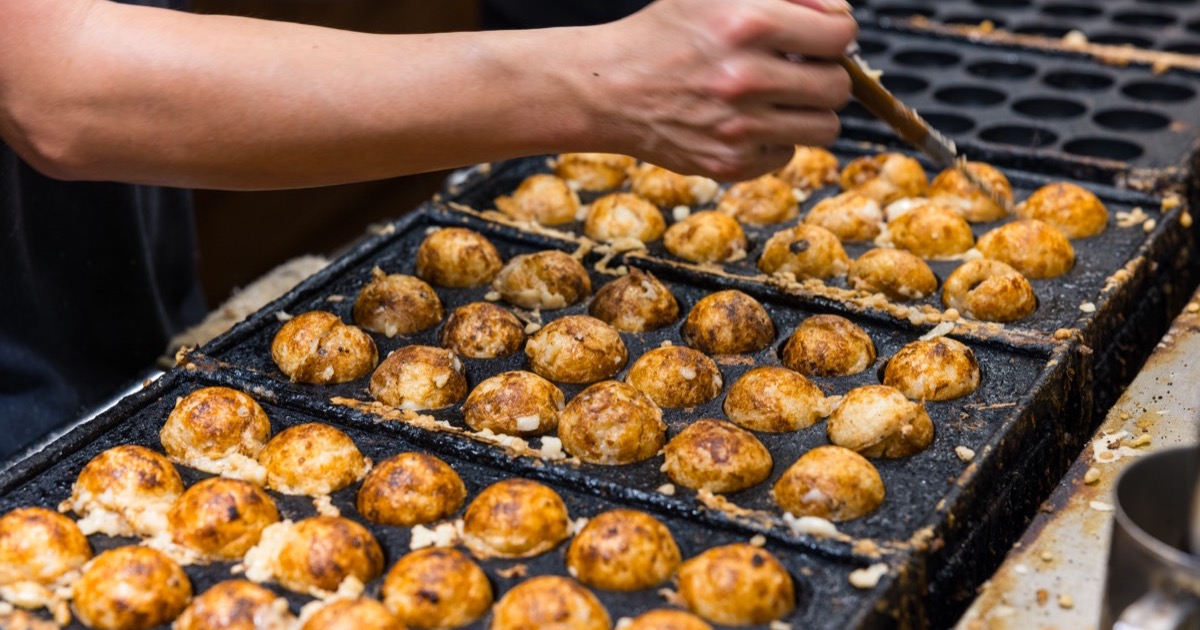
Osaka is called tenka no daidokoro— the nation's kitchen — a name it earned centuries ago as the country's rice and trade hub, and never gave back. The dishes that define casual Japanese eating largely started here: takoyaki turned in their moulds on the street, okonomiyaki cooked on the griddle in front of you, kushikatsu skewers fried and dipped in a communal sauce (into which, famously, you do not double-dip).
The correct way to eat Osaka is in two registers. First, graze: Dotonbori and the covered lanes around it are for standing up, eating something hot out of paper, and moving on. Kuromon Market is the daylight version — a long arcade of fish, fruit, wagyu skewers and pickles where much of the city's produce passes through.
Then sit down. Osaka's counters — the sushi, the teppanyaki where wagyu meets steel in front of you, the small kappo restaurants — are as good as anything in Tokyo and cost meaningfully less. This is the part visitors miss, because these places are small, unmarked, in the basements and upper floors, and rarely take a booking from a stranger. It is the single biggest gap between a good Osaka night and a great one.
The city
Osaka by neighborhood
At a glance
Osaka splits into Minami (south — Namba, Dotonbori, Shinsaibashi: food and neon) and Kita (north — Umeda: transport, shopping, polish). The castle sits east; Shinsekai keeps the old post-war city alive.
Minami (Namba & Dotonbori)
Neon · Canal · Kuidaore
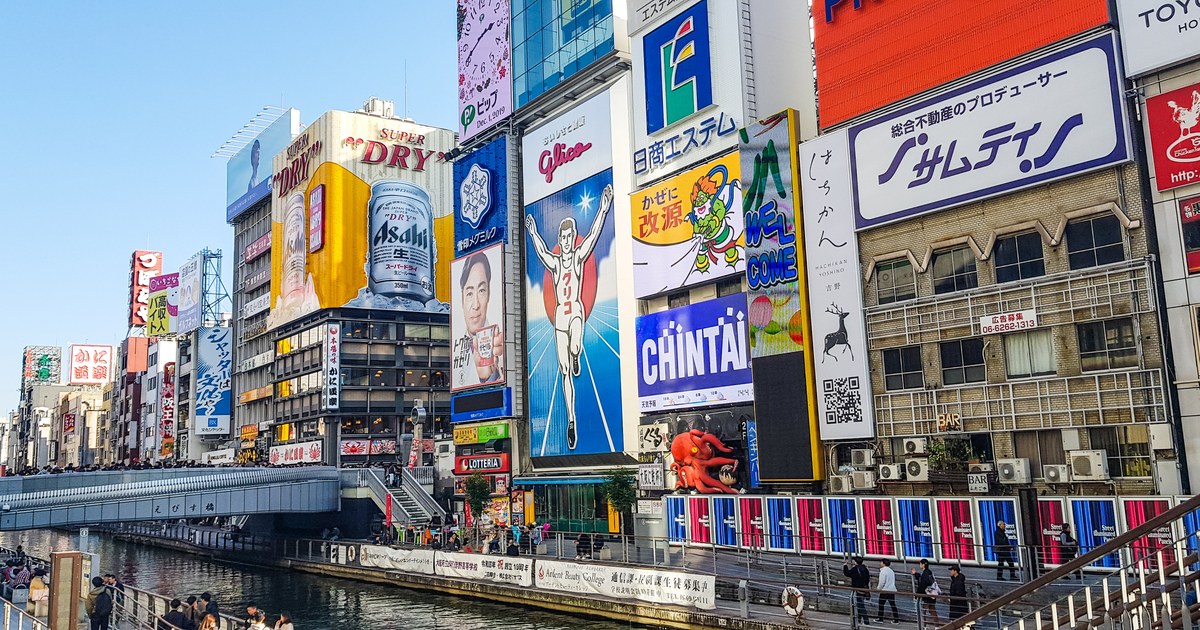
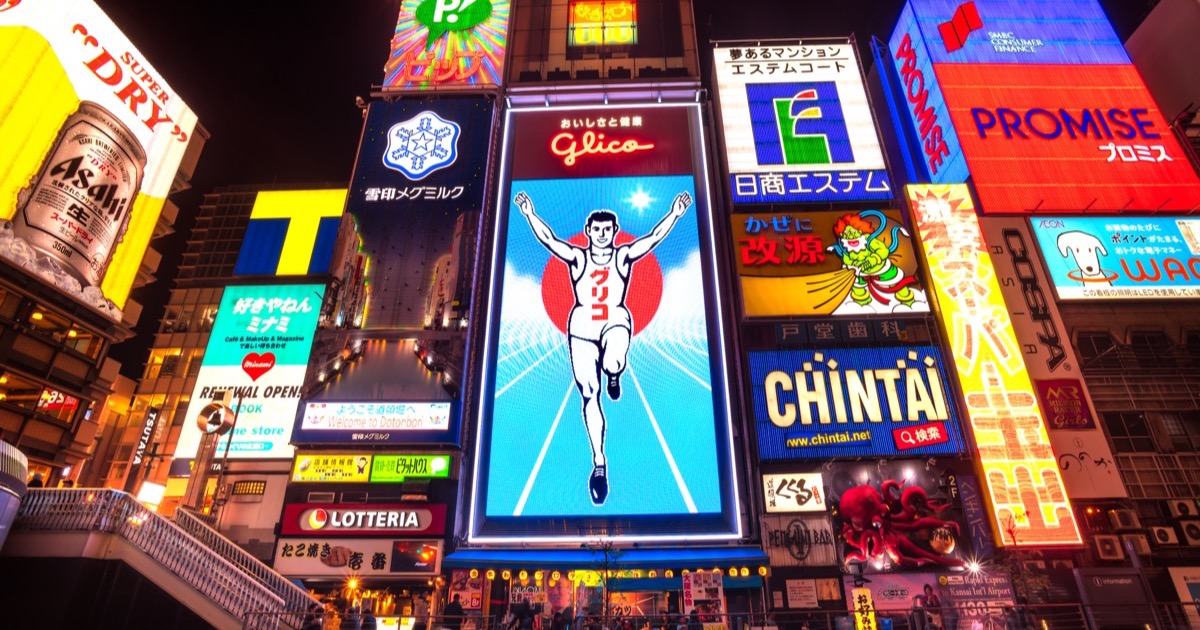
This is the Osaka of the photographs: the canal, the running-man sign, the giant mechanical crab, and a density of restaurants that has to be walked to be believed. It is loud and unapologetically commercial, and it is also genuinely the best fun in urban Japan after dark. Stay here if the eating is why you came.
Kuromon Market
Produce · Wagyu · Daylight
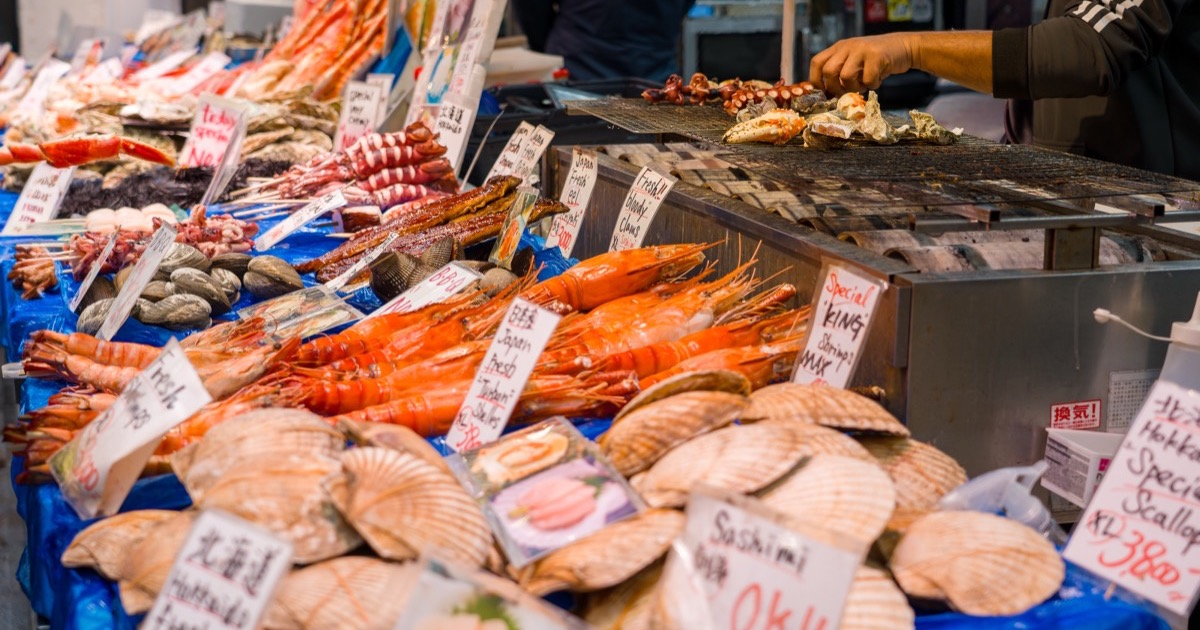
A covered market running for blocks, where restaurant cooks buy in the morning and everyone else grazes through the afternoon — fish grilled where you stand, wagyu on skewers, fruit priced like jewelry. It is the daylight counterpart to Dotonbori and a much calmer way to eat well.
Osaka Castle
History · Park · Sky
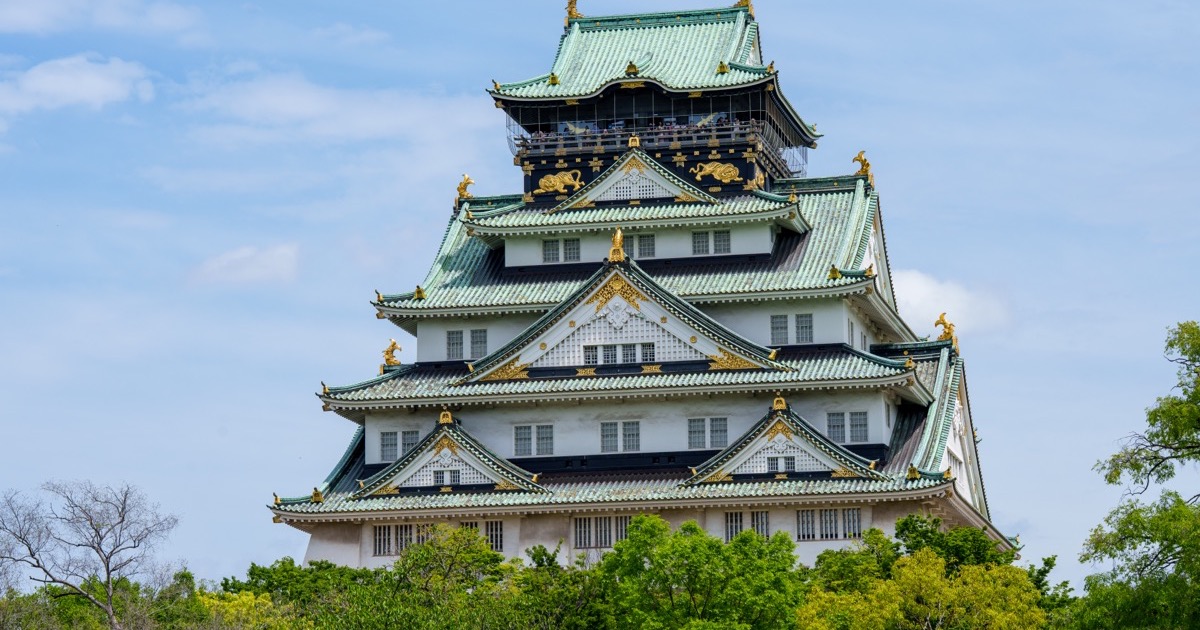
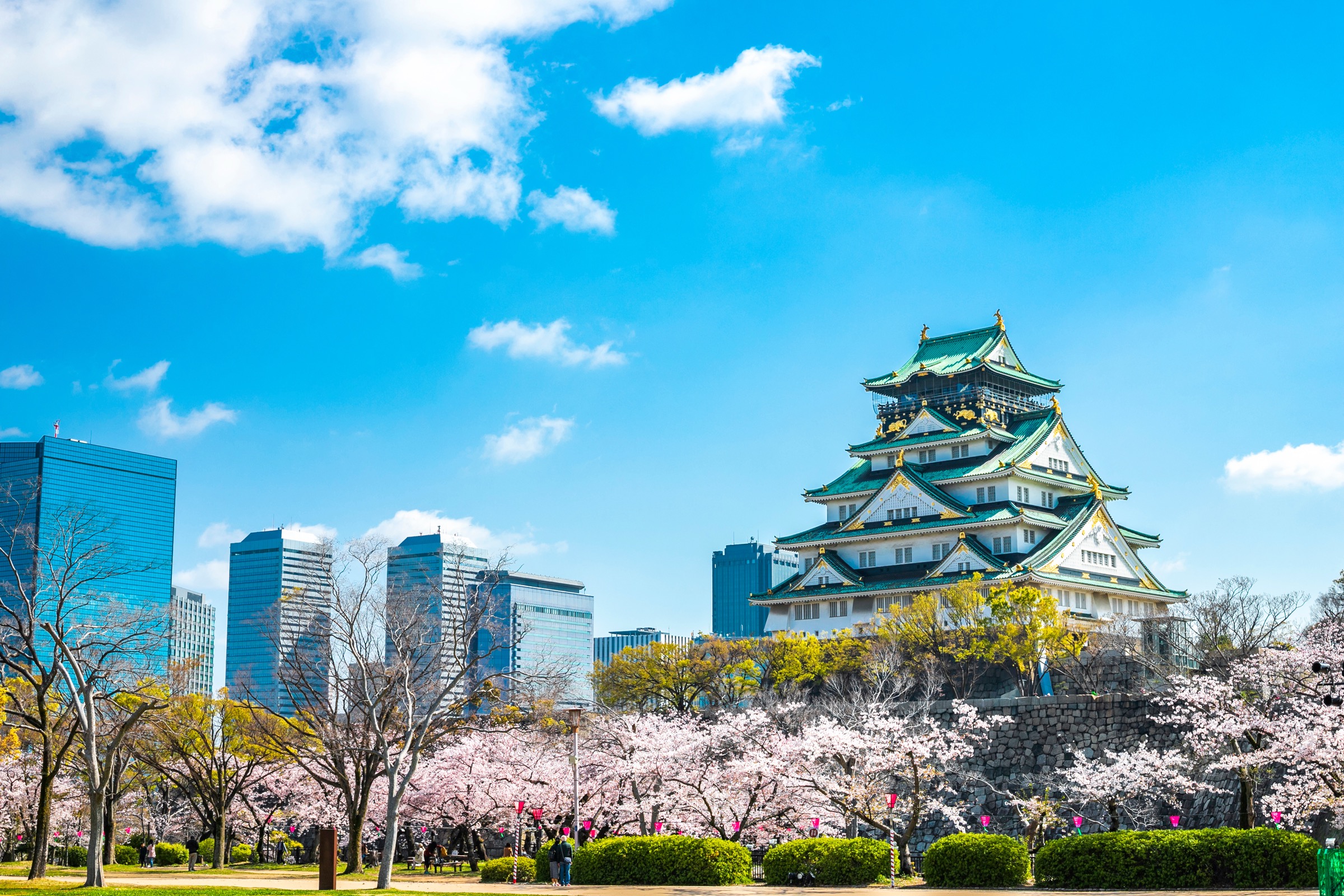
The castle is a reconstruction, and it is still worth an hour — largely for the moat, the enormous stone walls at its base, and the park around it, which is one of the city's best in cherry season. Go for the grounds rather than the interior.
Kita (Umeda)
Transport · Shopping · Height
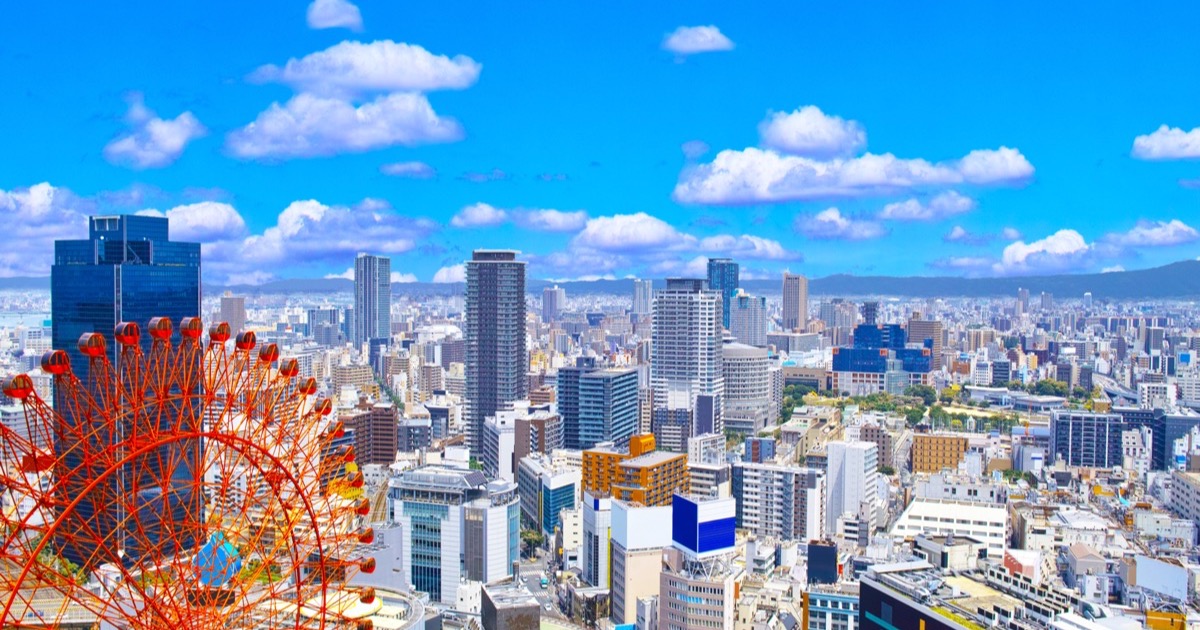
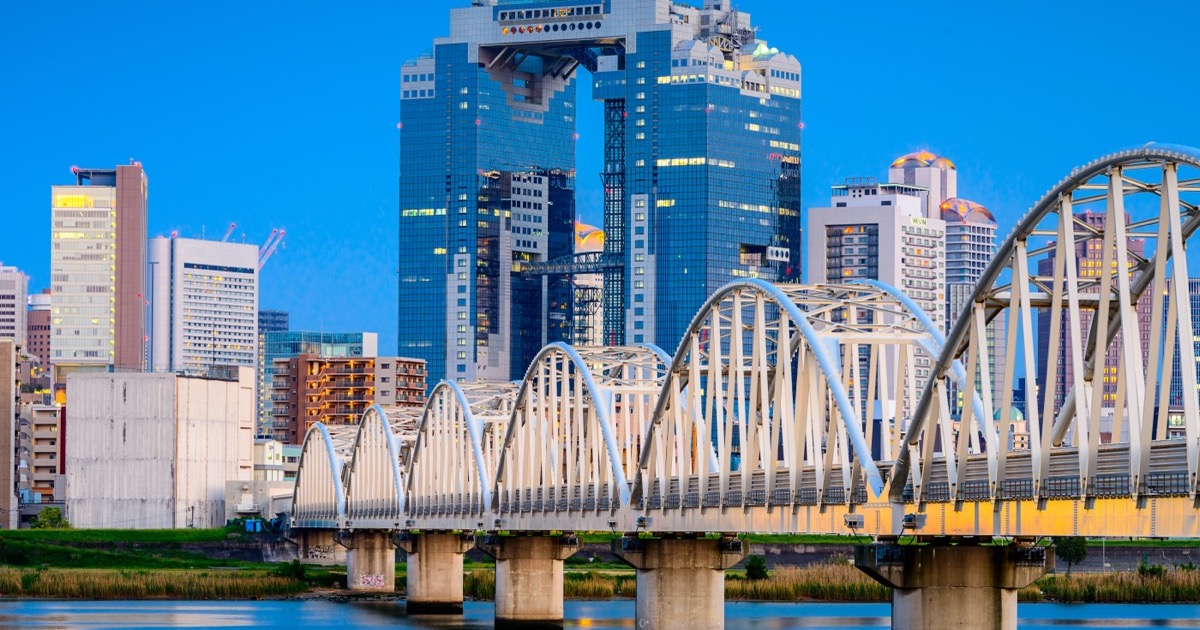
The northern business district: the main rail hub, department stores, and the Umeda Sky Building with its open-air observatory. It is the polished, efficient Osaka — the right base if you want easy transport and a quieter night, at the cost of the atmosphere down south.
Where to sleep
Where to stay in Osaka
At a glance
Minami (Namba / Shinsaibashi) if you came to eat — the food is on your doorstep and the night lasts as long as you do. Umeda (Kita) for transport, shopping and calm. Both are well connected; the difference is atmosphere, not convenience.
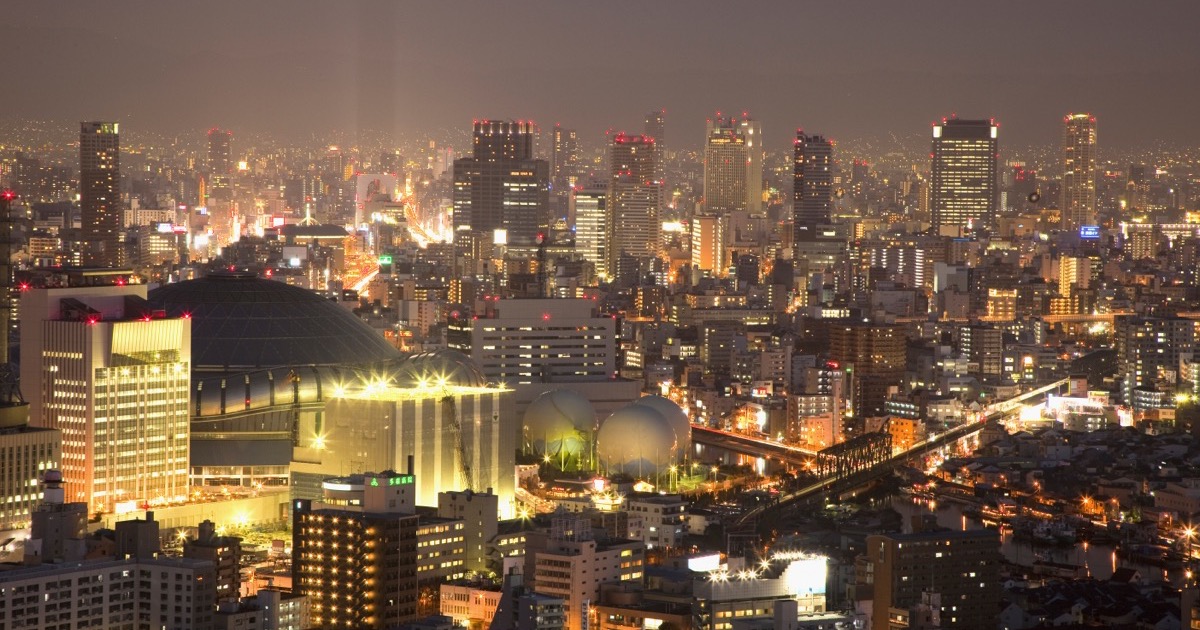
The honest advice for a first visit is to stay south. Osaka's pleasure is walking out of your hotel at nine in the evening into the noise and the smell of the griddles, eating one more thing, and walking home. Do that from Umeda and you are taking a train back at midnight; do it from Namba and it is a five-minute stroll.
Umeda earns its place if Osaka is your Kansai base rather than your destination — it is the transport hub, so Kyoto, Kobe and the airport are all simpler from there, and the hotels are generally newer and more international in feel. Families and travelers with early trains often prefer it.
And here is a number that quietly settles the “where should I base myself in Kansai?” argument. Both cities charge a lodging tax per person per night, on top of the room. Osaka's, revised in September 2025, tops out at ¥500. Kyoto's, revised in March 2026, tops out at ¥10,000.
| Room rate, per person per night | Osaka | Kyoto |
|---|---|---|
| Under ¥5,000 | none | ¥200 |
| ¥20,000 – ¥50,000 | ¥500 | ¥1,000 |
| ¥100,000 and above | ¥500 | ¥10,000 |
At the top of the market that is a twenty-fold difference, per person, per night — and Kyoto is thirty minutes away. We are not going to pretend that settles it, because a night in a Kyoto ryokan is worth paying for and Osaka has no equivalent of it. But for a family of four on a longer stay, it is real money, and nobody tells you until the bill. Rates as of July 2026.
After dark
Osaka after dark
At a glance
Night is Osaka. The canal at Dotonbori, the alleys of Hozenji Yokocho, the retro neon of Shinsekai, and the standing bars of Ura-Namba where the city actually drinks.
Most Japanese cities go quiet in the evening. Osaka wakes up. The canal fills with light and reflections and people photographing the running man; a street away, Hozenji Yokocho is a stone-paved lane of tiny restaurants with a moss-covered statue at its end that passers-by splash with water for luck. The juxtaposition — the loudest street in Japan and a mossy shrine sixty seconds apart — is Osaka in miniature.
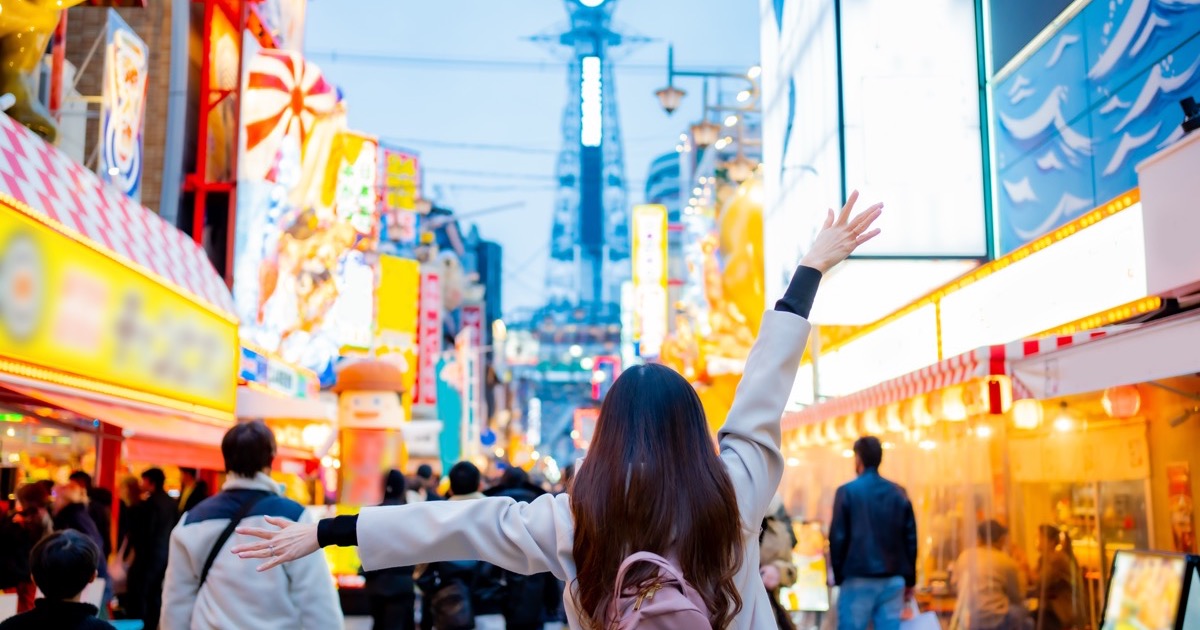
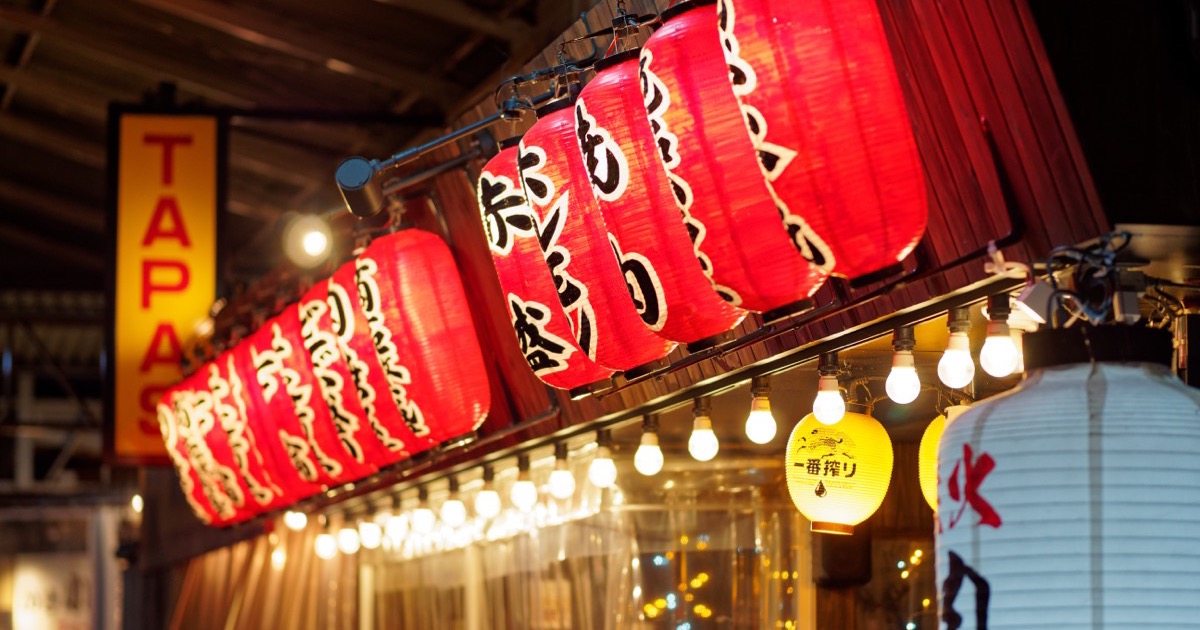
Shinsekai, further south, is the post-war city preserved: kushikatsu joints under a tower that was modelled on the Eiffel, unashamedly retro and a bit rough at the edges. And Ura-Namba — the lanes behind the main drag — is where locals stand and drink and eat small plates until late, and where the night stops being for visitors.
One rule that will cost you if you don't know it. Since January 2025 smoking on the street is banned across all of Osaka City — not just the few designated districts it used to cover — with a ¥1,000 fine. It applies to heated tobacco (IQOS, glo, Ploom) exactly as it does to cigarettes. So the obvious move on a Dotonbori evening — a drink, a skewer, a cigarette on the bridge — is the one that gets you fined. Use the marked smoking areas; there are more of them than you would expect, and staff will point you to the nearest.
With family
Osaka with children
At a glance
One of Japan's easiest cities for families: Universal Studios Japan, a world-class aquarium, a castle with a park, and street food children actually want to eat. Flatter and more compact than Kyoto, and far less formal.
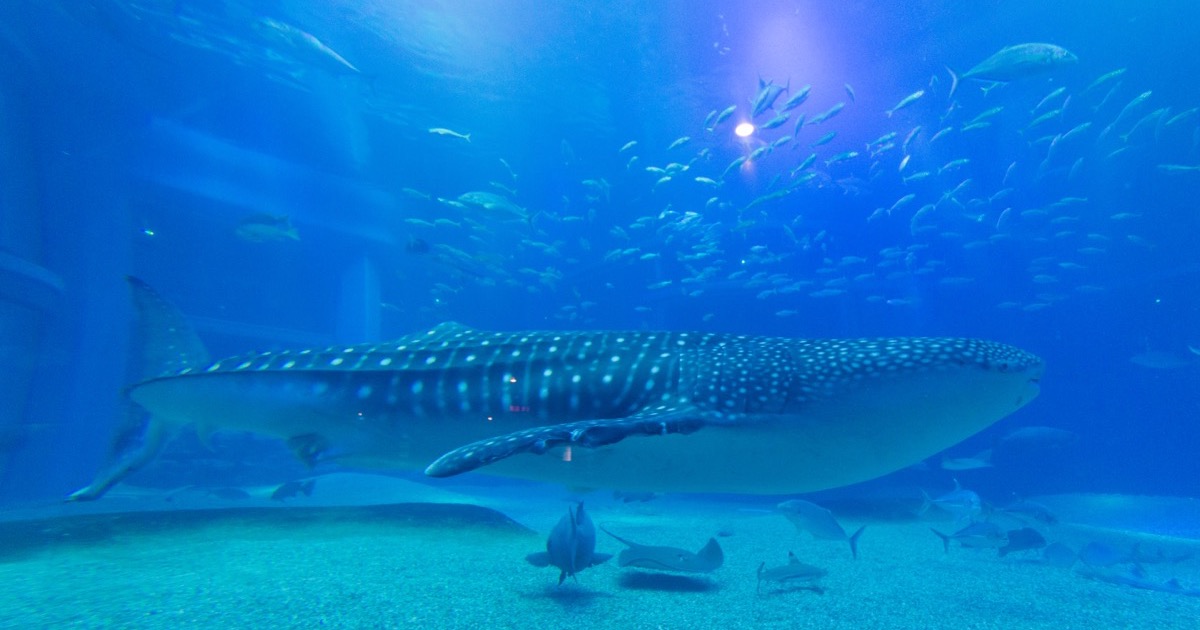
Osaka works with children in a way that temple-heavy itineraries do not. The eating is casual, hot, handheld and fun — takoyaki and okonomiyaki are, from a nine-year-old's point of view, a considerable improvement on kaiseki. The aquarium is among the largest in the world and built around a single enormous central tank. Universal Studios Japan needs no explanation and, for many families, is the day the kids talk about most.
Do not turn up at Universal without the app.Super Nintendo World — expanded again in December 2024 with the world's first Donkey Kong Country — is not simply included with your ticket: entry to the area is controlled by timed passes, and since January 2026 those are issued through the official app. A family that arrives with a park ticket and no app can find itself unable to get into the one thing the children came for. Download it, and set it up, before the day.
It is also simply easier: shorter distances, flat streets, and a population that is markedly warm toward children. Families running the classic route often find Osaka the day everyone relaxes. Our story of a California family's seven days in Japan gives a sense of how it fits into a wider trip.
Beyond the city
The best day trips from Osaka
At a glance
Osaka is the best base in Kansai. Nara (Great Buddha, deer) under an hour; Kobe (beef, harbour) thirty minutes; Himeji(Japan's finest castle) about an hour; Kyoto thirty minutes.
This is Osaka's quiet advantage over Kyoto as a base: everything in the region is closer. Nara is the classic — Japan's first capital, a park full of bowing deer, and Todai-ji's Great Buddha in one of the largest wooden buildings on earth. Half a day, and it lands more gently than Kyoto does.
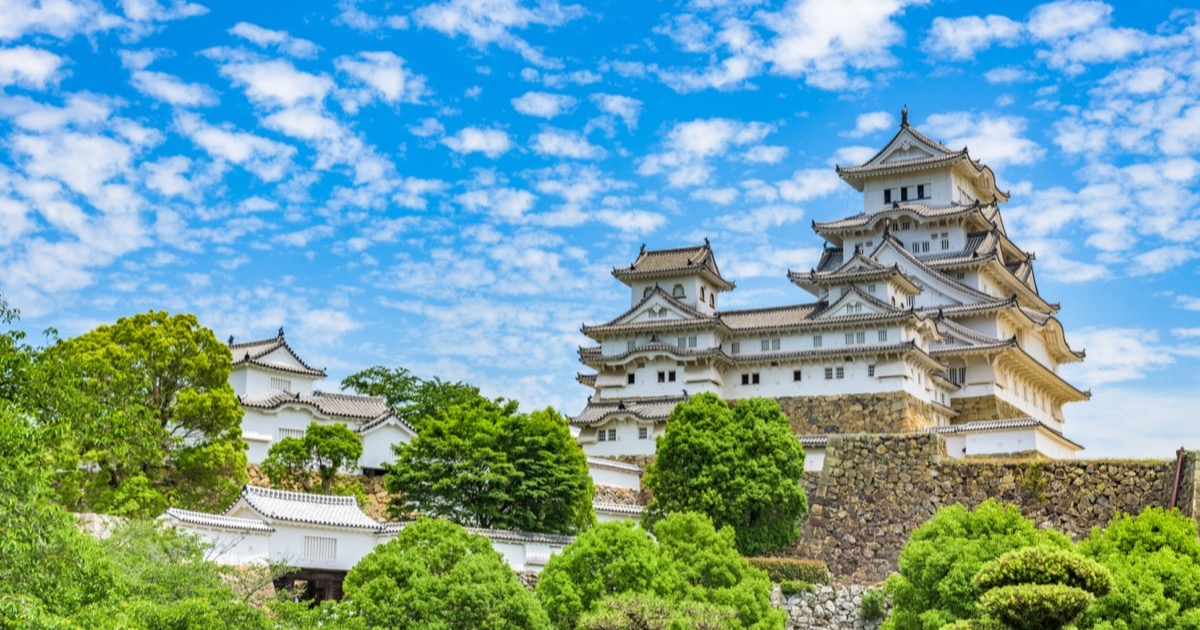
Kobe is thirty minutes and offers the harbour, a hillside city with a European history, and the beef — which, eaten at a teppanyaki counter in the city it is named after, is worth the trip on its own. Himeji is further but holds the prize: the great white castle, the finest original fortress in Japan and the one that never fell or burned.
And for travelers with more time, the mountains south of here open into a different Japan entirely — a temple night on Koyasan and the Kumano Kodo pilgrimage.
A street-smoking fine, a lodging tax that swings twenty-fold across thirty minutes of track, a counter that won't take your call — Osaka is generous, but it does not hand you the good version. That part we handle. Start a conversation →
Practical
Getting around Osaka
At a glance
A dense subway network, a compact and flat center, and everything in Kansai within an hour. From Kansai airport it is roughly 40–60 minutes by express train; from Tokyo, two and a half hours by Shinkansen.
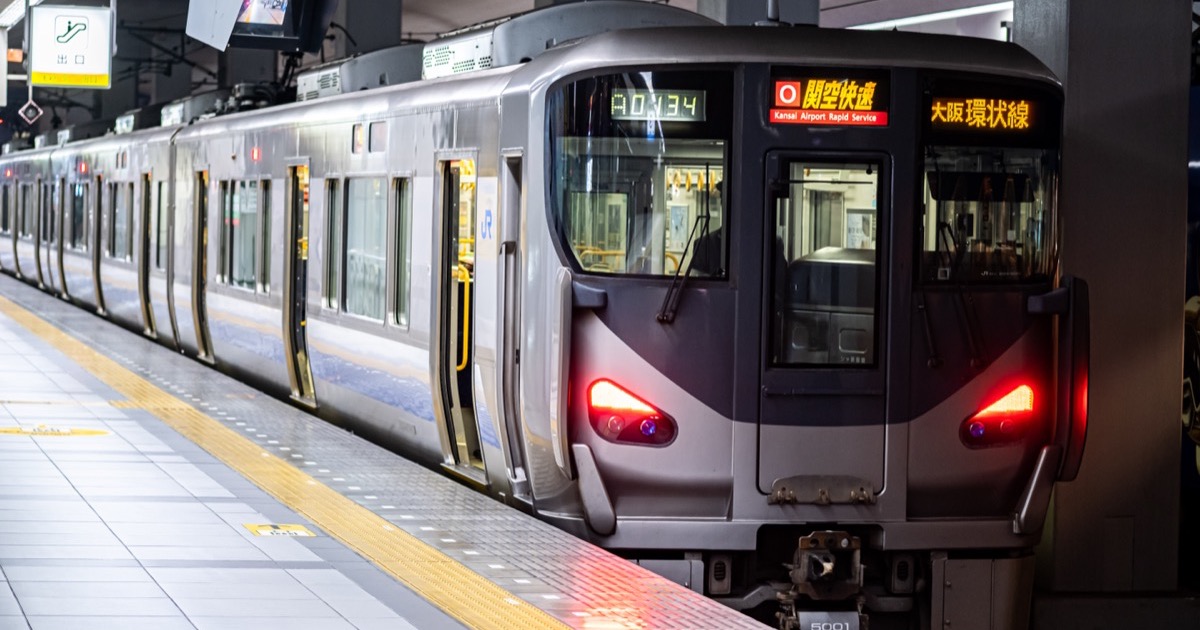
Osaka is the easiest large Japanese city to get around. The subway is dense and logical, the center is flat enough to walk, and the two hubs — Umeda in the north, Namba in the south — are ten minutes apart. Unlike Kyoto, you are rarely fighting the transport to reach the good things.
Kansai International is the region's gateway and sits on an artificial island south of the city, about 40–60 minutes in by express train, or a straightforward private transfer if you are arriving with luggage after a long flight. From Tokyo, the Shinkansen takes about two and a half hours to Shin-Osaka.
If Osaka is your Kansai base, the maths is compelling: Kyoto in 30 minutes, Nara in 45, Kobe in 30, Himeji in an hour — and you come home each evening to the best dinner options of any of them.
Timing
When is the best time to visit Osaka?
At a glance
Spring (cherry blossom around the castle) and autumn are the most pleasant. Summer is hot and humid but the night eating is at its best; winter is mild by Japanese standards and quiet — and the food does not have a season.
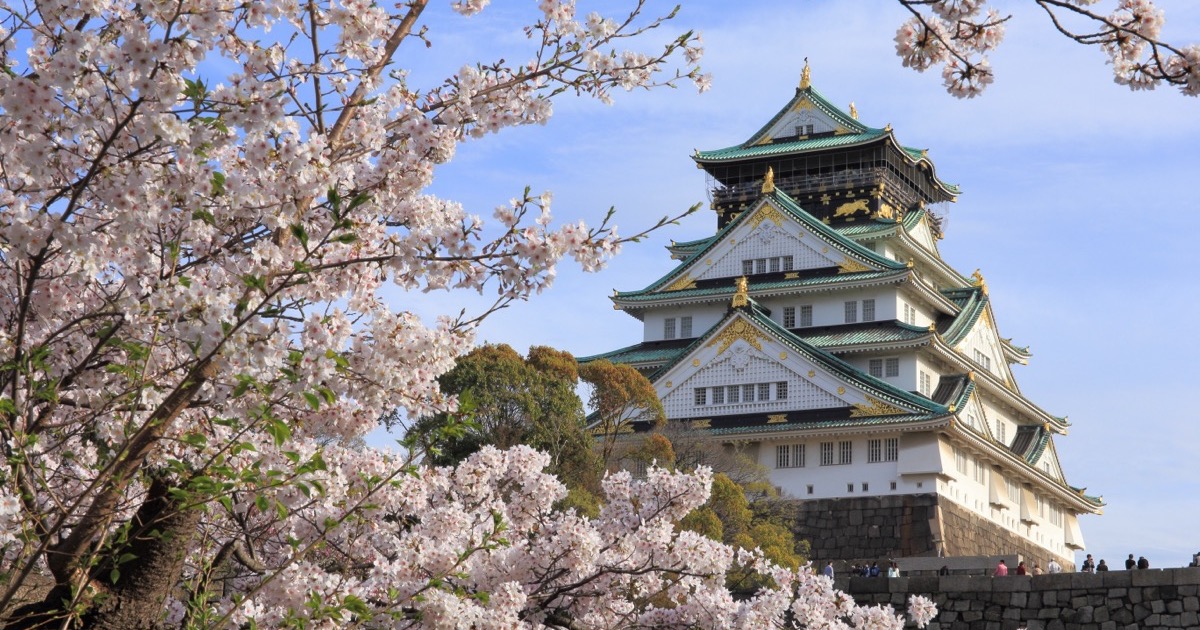
Osaka is less seasonal than Kyoto because you are not here for gardens. Spring is lovely — the castle park is one of the region's better cherry spots, and it is far less oversubscribed than Kyoto's. Autumn is comfortable walking weather and the food markets are at their richest.
Summer is genuinely hot and humid, but Osaka handles it better than most: the arcades are covered, the eating happens at night, and the city is at its most alive in the warm dark. Winter is mild, quiet, and arguably the best time to eat here — hot pots, standing bars, steam on the windows, and no queues at all.
The difference
What a private guide adds
You can eat well in Osaka on your own — that is almost the city's promise. What you can't easily reach is the counter in a basement with eight seats and no sign, the teppanyaki chef who cooks for you rather than at you, the market stall that keeps the good cut back for people it knows. In a city whose entire pleasure is food, the difference between the street and the room behind it is the whole trip.
That is the part we handle: the reservations, the introductions, the ordering. You simply get to sit down and eat.
Plan your Osaka nights →Questions, answered
Is Osaka worth visiting, or is it just a base for Kyoto?+
Osaka is worth visiting in its own right, and treating it as a dormitory for Kyoto is the most common mistake on a first trip. It receives more international visitors than any city in Japan except Tokyo, and it has the best eating in the country. Give it at least one full evening; two days if you like food.
How many days do you need in Osaka?+
One to two days is right for most itineraries. One night gets you an evening in Dotonbori and one proper meal; two days adds the castle, a neighborhood or two, and the day trips to Nara or Kobe. Food lovers can happily fill three.
What food is Osaka famous for?+
Takoyaki (octopus dumplings), okonomiyaki (the savory pancake), kushikatsu (skewered and fried), and kitsune udon all came from here. Osaka's nickname is 'the nation's kitchen', and the local expression kuidaore — to eat yourself into ruin — is a point of civic pride rather than a warning.
Where should you stay in Osaka?+
Namba and Shinsaibashi for the food and nightlife on your doorstep; Umeda (Kita) for transport, shopping and a more polished, business-district feel. First-time visitors who came for the eating should stay south, in Minami.
How far is Osaka from Kyoto?+
About thirty minutes by train — close enough that many travelers base themselves in one and dine in the other. It also puts Nara, Kobe and Himeji all within an easy day trip, which makes Osaka a strong base for the Kansai region as a whole.
Is Osaka good for families?+
Very. Universal Studios Japan is here, the aquarium is one of the largest in the world, the castle has a park around it, and the street food of Dotonbori is exactly the kind of eating children actually enjoy. Osaka is also flatter and more compact than Kyoto.
What are the best day trips from Osaka?+
Nara (the Great Buddha and the deer park) is under an hour; Kobe (beef, harbour, a hillside city) is thirty minutes; Himeji, with Japan's finest surviving castle, is about an hour. Kyoto, of course, is thirty minutes away.
How is Osaka different from Tokyo?+
Osaka is warmer, louder, funnier and less formal. Tokyo is precise; Osaka is direct. People talk to strangers, the comedy tradition is a genuine part of the culture, and the whole city organizes itself around eating well rather than around work. Most visitors find it the friendliest city in Japan.
Continue exploring
Japan changes its prices and its rules more often than most countries, and a good deal of what is written about it online is quietly out of date. The fares, fees, taxes and access rules on this page were checked against the official sources below in July 2026. Where something was likely to move, we have said so in the text. If you are traveling on dates far from that, check the official page — or ask us — rather than trusting any guide, including this one.
Checked against